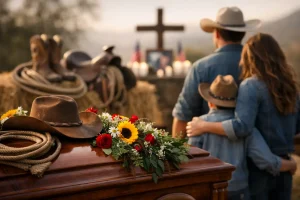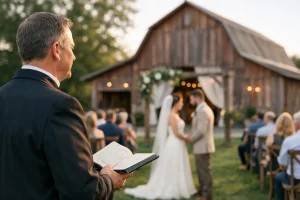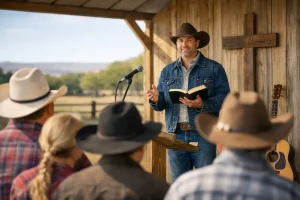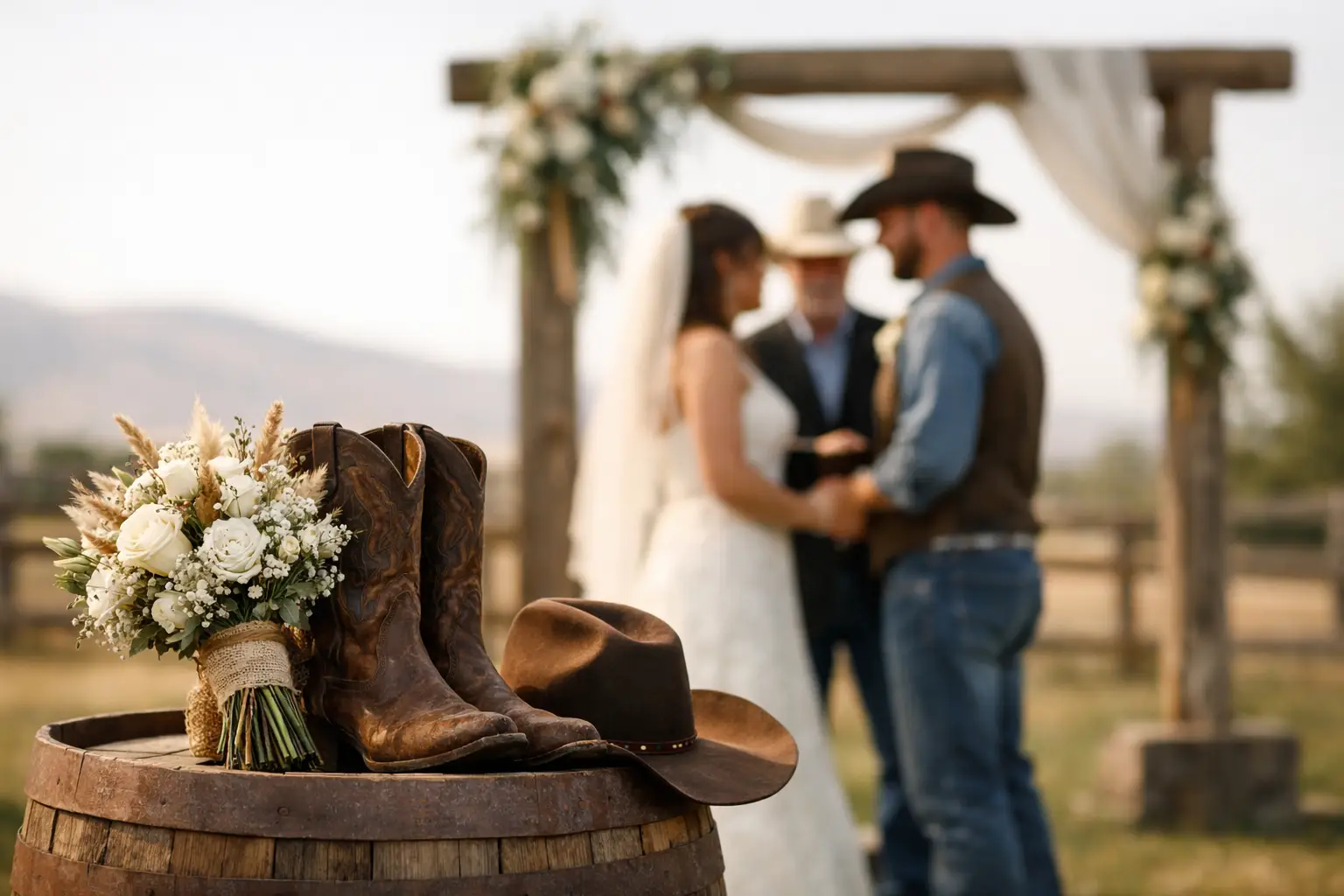
A cowboy wedding ceremony ought to feel like home – not like somebody dressed your love story up in borrowed boots. If you’re looking for a guide to cowboy wedding ceremony planning, the goal is not to stack up rustic decorations and call it Western. The goal is to build a ceremony that honors your faith, fits your story, and feels natural in the ranch, rodeo, and country life you already live.
For some couples, that means saying vows under an open sky with a cross in the distance and family gathered in folding chairs by the barn. For others, it means a small ceremony at an arena, a pasture, or a country venue where boots are welcome and the Bible is central. There is no single right way to do it. A real cowboy wedding is not about putting on a theme. It is about starting a marriage with honesty, reverence, and a country heart.
What makes a cowboy wedding ceremony feel real
The strongest cowboy weddings are grounded in who the couple actually is. If you grew up around cattle, horses, trailers, early mornings, and long workdays, your ceremony should reflect that life without trying too hard. If rodeo has been part of your story, there may be room to honor that. If your family is deeply rooted in church and Scripture, that should lead the day more than any style choice.
That is where many couples get hung up. They focus on hats, boots, and hay bales before they ever talk about what they want the ceremony to say. Western details matter, but they should support the moment, not take it over. A cowboy wedding ceremony feels real when the setting, the words, and the people all line up with your values.
Faith often sits at the center of that. In the cowboy community, marriage is not just a celebration. It is a covenant before God. That does not mean your ceremony has to sound stiff or formal. It means the message should carry weight. The best ceremonies are simple, clear, and rooted in truth about commitment, sacrifice, and the kind of love that stays steady when life gets hard.
A guide to cowboy wedding ceremony choices that matter most
Before you pick songs or decide where everybody will stand, it helps to settle a few bigger questions. What kind of atmosphere do you want? How openly faith-centered should the ceremony be? Do you want it quiet and traditional, or relaxed and personal? Those choices shape everything else.
The officiant matters more than couples sometimes realize. A strong officiant does more than read lines. He helps set the tone, keeps the ceremony grounded, and speaks in a way that fits the people in front of him. For a Western wedding, that often means finding someone who understands ranch life, rodeo culture, and country families – and who can bring biblical truth without sounding disconnected from the crowd.
The venue matters too, but maybe not in the way people think. A pasture at sunset can be beautiful, but wind, dust, heat, and sound can make an outdoor ceremony harder than expected. A barn can feel warm and personal, but it may need more seating, lighting, or space planning than a couple first assumes. A country venue can make logistics easier, though it may feel less personal than family land. None of those options is wrong. It depends on whether your top priority is meaning, convenience, guest comfort, or all three in balance.
Then there is the question of size. A large wedding can turn into a community event fast, especially in small-town or rodeo circles where everybody knows everybody. That can be a blessing, but it can also shift the focus. Some couples are happiest with a crowd and a big fellowship feel. Others want a more intimate ceremony where every face there has walked closely with them. Either way, the ceremony should not get lost in the production.
Writing vows that sound like you
Cowboy couples usually know when something sounds fake. That is why vows deserve careful attention. You do not need fancy language. You need truthful language.
Some couples prefer traditional vows because they are clear, strong, and time-tested. There is a lot to be said for that. Promises like faithfulness, honor, and lifelong commitment already carry deep meaning, especially when spoken before God and family. Other couples want to add personal vows, and that can be powerful too, as long as the words stay rooted in the seriousness of marriage and do not drift into performance.
A good rule is to keep personal vows plain and steady. Speak the way you actually speak. Promise what marriage truly asks of you. Mention faith if faith is what holds your relationship together. Talk about standing by each other in hard seasons, not just happy ones. Marriage in country life often means long hours, lean seasons, family responsibilities, and work that does not wait. Your vows should be big enough to hold real life.
Western details that add meaning
The best cowboy wedding details are the ones that carry personal weight. A family Bible, a granddad’s saddle, a cross built from reclaimed wood, or a horse standing nearby can all be meaningful if they connect to your story. Used well, those details bring depth. Used poorly, they can feel staged.
Attire should follow the same thinking. Boots, hats, denim, lace, turquoise, leather, and classic Western cuts can all fit beautifully. But comfort and respect matter. If the groom never wears a starched jacket, he does not need to become someone else for the ceremony. If the bride wants a traditional gown with cowboy boots, that can work just as well as something more rustic. The goal is not to fit an image. It is to show up as yourselves.
Music also helps shape the moment. A country gospel song, a hymn, or an acoustic piece can fit naturally in a cowboy wedding ceremony. Just be careful not to let the music overpower the message. If faith is central, the songs should support that. If family tradition matters, include something that means something to your people. Familiar songs often reach deeper than trendy ones.
Keeping the ceremony Christ-centered without making it complicated
For Christian couples, a guide to cowboy wedding ceremony planning should say this plainly: if you want Christ at the center, put Him there on purpose. That starts with Scripture, prayer, and an officiant who is willing to speak truth with love.
A Christ-centered ceremony does not need a long sermon. It needs clarity. Marriage is a covenant, not a contract. Love is more than emotion. Commitment is proven over time. Those truths land well when they are spoken plainly.
Scripture readings can be short and still carry weight. Prayer can be simple and sincere. A unity element, like a cord of three strands or a family Bible presentation, can work if it feels natural to the couple. If it feels forced, leave it out. Not every ceremony needs extra symbols. Sometimes the most powerful moment is simply a man and woman making honest vows before God.
This is also where the right officiant makes a difference. Someone who understands both the Gospel and the cowboy way of life can keep the ceremony warm, respectful, and grounded. That kind of ministry matters, especially for couples who want a wedding that feels pastoral rather than performative. Ministries such as Burleson Cowboy Ministries serve that need by bringing biblical care into places where cowboy families actually gather.
Planning for guests, weather, and real life
Cowboy weddings are often beautiful because they are not overly polished. Still, practical planning matters. If your ceremony is outdoors, have a backup plan for weather. If older family members are attending, think about seating, shade, parking, and how far they will need to walk. If wind is common, test your sound system and make sure the officiant can be heard.
Animals, open land, and working spaces can make a wedding memorable, but they also call for clear planning. If horses are part of the ceremony, assign someone responsible for handling them. If the wedding is on ranch property, think through safety and guest flow. If children are involved, keep expectations realistic. Country weddings can be relaxed without being disorganized.
Timing matters too. Sunset is beautiful, but daylight fades fast. Summer heat can be rough in Texas and Oklahoma. A midday ceremony may be easier for travel, while an evening one may feel more comfortable outside. There is always a trade-off. Choose what serves the people and the purpose, not just the pictures.
A cowboy wedding ceremony should feel steady, personal, and full of meaning. If you build it around faith, truth, and the life you really live, you will not need much else to make it memorable. The strongest beginning is not the fanciest one. It is the one where two people stand before God, speak honest vows, and start their marriage on solid ground.