When a ranch family loses someone, the funeral is rarely just an hour-long service. It carries the weight of land, livestock, long friendships, hard work, and a way of life that shaped the person being honored. That is why a guide to ranch funeral etiquette matters. It helps folks show up with respect, avoid drawing attention to themselves, and support a grieving family in a way that fits the ranching and cowboy community.
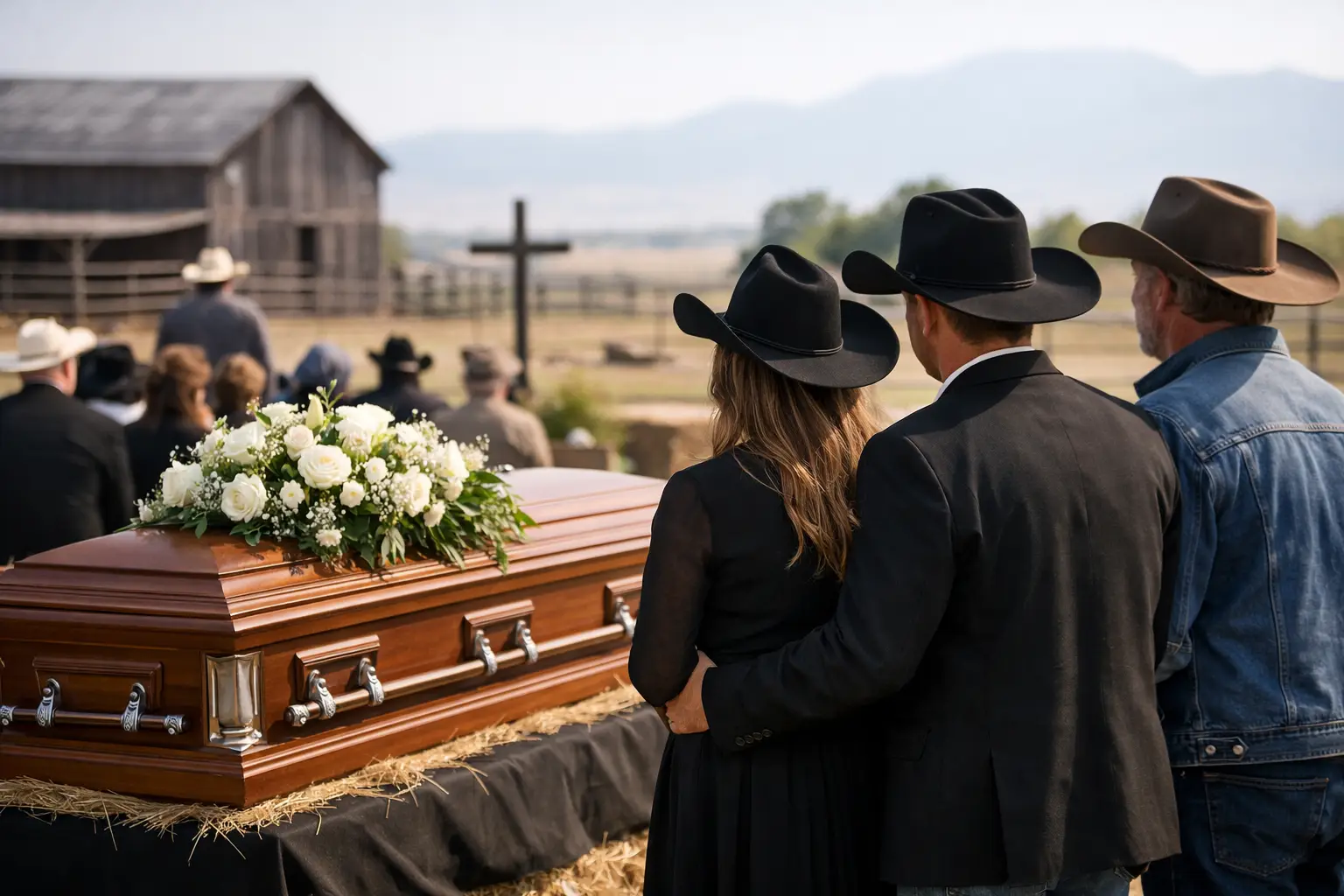
Ranch funerals often feel different from services held in town or inside a traditional church building. They may be held at a cowboy church, a barn, an arena, a family property, or a small country cemetery. The setting may be simple, but that does not make the moment casual. In many cases, it calls for even more thoughtfulness because the family is opening up a place that was part of their loved one’s everyday life.
What makes ranch funeral etiquette different
At the heart of ranch funeral etiquette is respect for both grief and culture. Ranch families tend to value sincerity over polish. They are usually not looking for grand displays, fancy words, or people trying to impress anybody. They appreciate folks who come ready to honor the deceased, help when needed, and carry themselves with humility.
That means the usual social rules still apply, but they are shaped by Western customs. A hat may be part of a man’s everyday wear. Boots may be the right choice, not a sign that someone dressed down. A horse procession, a riderless saddle, or a service near the pasture may carry deep meaning. If you are not from that world, the best approach is simple – pay attention, follow the lead of the family, and do not assume your usual funeral expectations fit every setting.
What to wear to a ranch funeral
For most ranch funerals, clean Western attire or modest country dress is appropriate. Pressed jeans may be acceptable if the setting and family are informal, but dark jeans without holes are a safer choice than anything flashy. A button-down shirt, boots, a clean hat, and a belt are often fitting for men. Women may wear a modest dress, skirt, blouse, or neat Western wear with boots.
The key is not whether your clothes are urban or rural. The key is whether they show honor. Loud prints, heavy jewelry, bright party colors, or anything that pulls attention away from the family can feel out of place. If you are unsure, choose quiet, simple, and respectful.
Hats deserve special mention because in cowboy culture they matter. Men commonly wear hats to a ranch funeral, especially outdoors. Still, there are moments when removing your hat is the respectful thing to do, such as during prayer, the national anthem, or when entering certain indoor spaces, depending on the family’s custom. Watch the men closest to the family or follow the direction of the minister if you are unsure.
Boots, hats, and practical sense
A ranch funeral may involve dirt roads, uneven ground, pens, pastures, or windy weather. Dress shoes that work in a city chapel may be a poor choice at a graveside on ranch land. Practical clothing is not disrespectful when it fits the setting. In fact, showing up prepared for the place can be a sign that you understand the life being honored.
How to carry yourself at the service
The best etiquette is steady and quiet. Arrive on time, or a little early if possible. If the service is held on private land, park only where directed and avoid blocking gates, trailers, equipment paths, or livestock access. On a ranch, those details matter.
Once you arrive, keep your voice low. Visit if appropriate, but do not treat the gathering like a reunion. Many ranch communities are close-knit, and funerals can bring together folks who have not seen each other in years. Even so, the day is not about catching up in a loud way. Let your presence be a comfort, not a distraction.
Phones should stay silent and put away. Taking photos is usually not appropriate unless the family has clearly invited it. The same goes for posting on social media. A family may appreciate public support, but that decision belongs to them, not the guests.
If there are horses, cattle, or ranch traditions involved
Some funerals include horseback riders, a final ride, a procession by truck and trailer, a folded flag, branding iron displays, ropes, spurs, saddles, or rodeo elements. These are not props. They represent a real life and a real story.
Treat those traditions with care. Do not touch gear, approach horses, or step into an active area unless invited. If a moment of silence is held as riders pass or a horse is led without its rider, stand still and let the moment speak. You do not need to understand every custom to respect it.
Speaking with the family
One of the hardest parts of any funeral is knowing what to say. In ranch country, plain words usually mean more than polished speeches. A simple “I’m sorry for your loss,” “We are praying for y’all,” or “He was a good man” often carries more weight than a long explanation.
If you knew the person, sharing one brief memory can be a gift. Keep it true, kind, and timely. This is not the moment for old conflicts, long stories, or comments that shift the attention to your own grief. Families remember who brought peace into the day.
If the family is hosting many guests, do not feel slighted if your conversation is short. Grief is tiring, and hospitality on a hard day takes a lot out of people. Offer your condolences, be gracious, and let them move at their own pace.
Helping in ways that actually help
A good guide to ranch funeral etiquette is not only about manners. It is also about service. In cowboy and ranching communities, love often looks like action. Folks bring food, haul chairs, help direct parking, check water troughs, feed animals, or take care of practical needs while the family is occupied.
That said, help should respect boundaries. Do not just start doing jobs on somebody’s ranch unless you have permission. Ask clearly and specifically. Saying, “Can I bring supper tomorrow night?” or “Do you need somebody to check horses this evening?” is often more useful than saying, “Let me know if you need anything.”
There is also wisdom in helping after everyone else goes home. The first day brings a crowd. The week after can feel very quiet. A call, a meal, or an offer to help with ranch chores later on may mean even more.
Faith, prayer, and the tone of the day
For many ranch families, funeral services are deeply Christian and centered on the hope found in Jesus Christ. Prayer, Scripture, old hymns, cowboy church music, and straightforward gospel preaching may all be part of the service. Even when the setting is outdoors or informal, the spiritual weight is real.
If you share that faith, join in with sincerity. If you do not, you can still be respectful by standing quietly, listening, and honoring the family’s beliefs. A ranch funeral often holds both sorrow and strength at the same time. People may cry openly, then turn around and speak with calm conviction about heaven, salvation, and seeing their loved one again. That is not denial. For many believers, it is the foundation that carries them.
In communities served by ministries such as Burleson Cowboy Ministries, that faith-centered approach often meets families right where they live and grieve, which can make a hard day feel more personal and rooted.
A few things to avoid
Most funeral missteps come from trying too hard or thinking too little. Avoid turning the day into a fashion statement, a social event, or a debate over how things should be done. Do not criticize the setting, the length of the service, the family’s choices, or the condition of the property. A working ranch is not a wedding venue. It is a place full of meaning and responsibility.
It is also wise not to make assumptions about money, land, livestock, or family business. Questions about inheritance, who will run the place now, or what happens to the horses can come across as cold and intrusive. There may be a time for practical conversations, but the funeral is usually not it.
Children are often welcome in ranch and cowboy settings, but parents should still make sure they understand how to behave. Letting kids run around equipment, chase animals, or interrupt solemn moments is unfair to the family and unsafe for the child.
Ranch funeral etiquette for out-of-town guests
If you are coming in from outside the ranching world, you do not need to pretend to be something you are not. You do not have to buy a brand-new cowboy hat or act like an expert on rural customs. People can usually tell the difference between honest respect and putting on a show.
Come clean, modest, and attentive. Follow signs and instructions. Listen more than you talk. If a custom is unfamiliar, let it be unfamiliar without making it awkward. Most families will appreciate a guest who is teachable far more than one who tries to blend in by force.
A ranch funeral is about honoring a life that was often built on faith, grit, family, and the land. If you show up with humility, kindness, and a willing heart, you will rarely go wrong. Sometimes the most respectful thing you can bring is not the perfect outfit or the perfect words, but a steady presence that says, without much fuss, we are here and you do not have to carry this alone.