A good outdoor church service can feel honest in a way four walls sometimes cannot. You have open sky overhead, boots in the dirt, families gathered close, and a chance to preach the Gospel right where people live and work. But an outdoor church service checklist matters because a peaceful service can turn stressful fast when the wind picks up, the speaker cuts out, or half the crowd cannot hear.
For ranch gatherings, rodeo grounds, arenas, barns, and community spaces, planning ahead is not about putting on a polished show. It is about removing distractions so folks can focus on worship, prayer, and the Word. The best outdoor services usually feel simple, but that simplicity is often built on careful preparation.
What an outdoor church service checklist should cover
At the heart of it, your checklist needs to answer a few plain questions. Can people hear? Can they see? Will they be safe and reasonably comfortable? Do your volunteers know what they are doing? And if weather shifts, do you have a backup plan that keeps everybody calm?
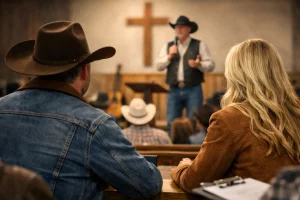
That means thinking beyond the sermon notes. Outdoor ministry asks you to plan for ground conditions, power sources, traffic flow, seating, shade, sound, and how to welcome people who may not have stepped inside a traditional church in years. In a cowboy church setting, that matters even more. Some folks are most at ease by the arena fence, under a pavilion, or beside the trailer they pulled in with.
Start with the location and layout
The setting shapes everything else. Before you finalize a service site, walk it in person if you can. Look at the ground, the parking access, where the sun will hit during service time, and how people will naturally enter and gather. A beautiful spot is not always the best spot if it is muddy, noisy, or hard for older guests to reach.
Think through where the preacher will stand and where the congregation will sit or stand. If you are using chairs, hay bales, bleachers, or tailgate seating, make sure sightlines are clear. A small rise in the land can help people see without much extra setup. If the area is flat, a simple platform may help, but only if it is stable and safe.
Noise is another big factor. Nearby traffic, livestock, generators, and wind can all compete with the message. Sometimes moving fifty yards in one direction can make a big difference. Do not assume a place will work just because it looks right.
Think about arrival before worship starts
People decide how welcome they feel in the first few minutes. Mark parking clearly. Leave room for trucks, trailers, and guests with limited mobility. If families are carrying kids, Bibles, and lawn chairs, the walk from parking to the service area should be straightforward.
It also helps to decide where greeting happens. Outdoors, guests can feel unsure about where to go. A couple of friendly volunteers near parking or the main path can set the tone quickly.
Sound, power, and visibility come next
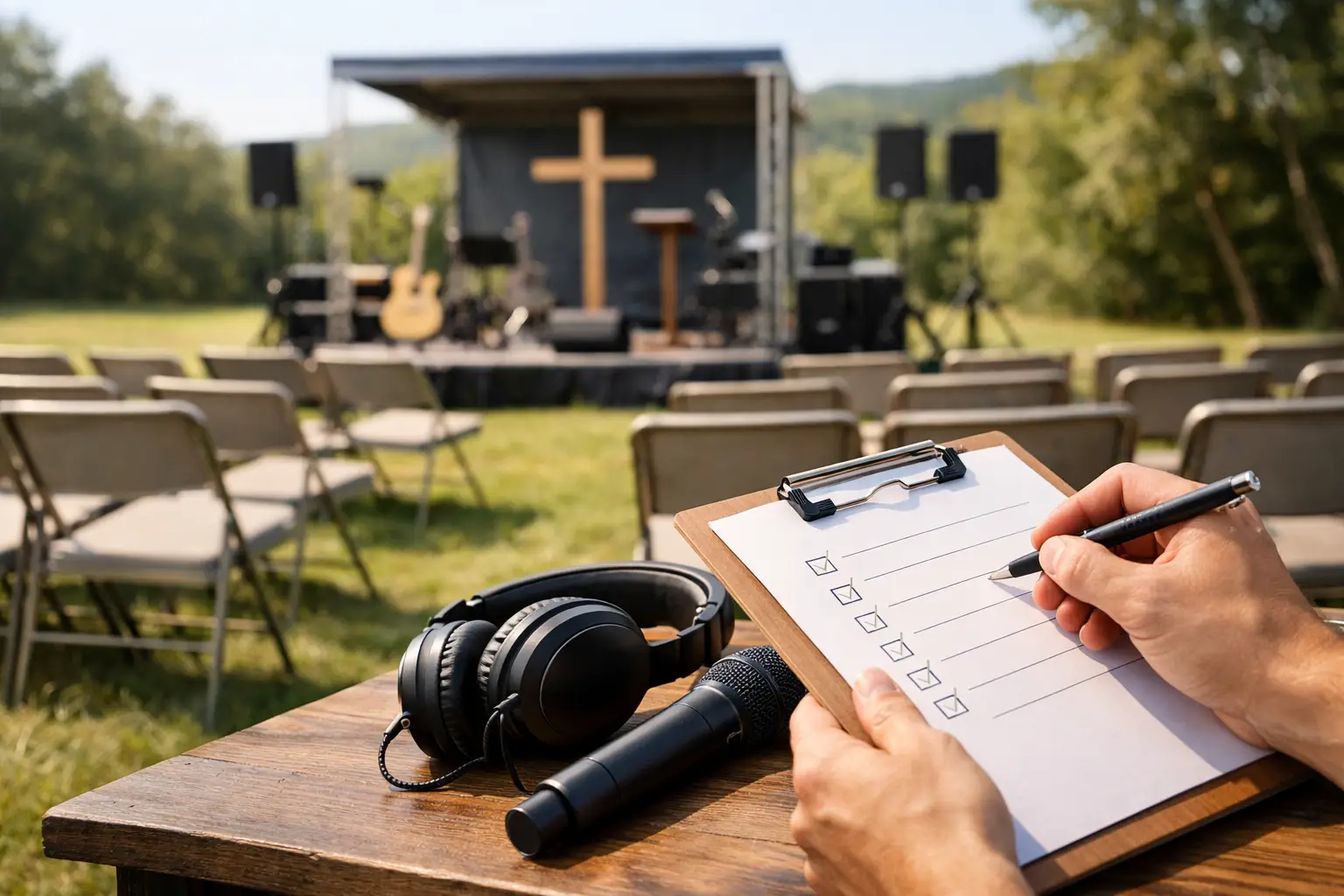
If folks cannot hear, they cannot fully join in. Outdoor preaching almost always needs more sound support than people expect. Even a small gathering can lose half the sermon to wind and open-air acoustics. Test microphones and speakers in the exact place and time of day you plan to use them if possible.
Use a microphone that the speaker is comfortable with. A bad mic setup can distract both preacher and congregation. Keep extra batteries, extension cords, and basic backup equipment on hand. If you are using generators, place them far enough away to reduce noise while still keeping power dependable.
Visibility matters too. If you are printing song sheets or a simple order of service, make the font large enough for outdoor light. If the sun is bright, glossy paper can be hard to read. If the service is later in the day, check how changing light affects both platform and seating.
Music outdoors takes a little more planning
Acoustic worship can be beautiful outside, but it depends on crowd size and wind. For smaller gatherings, a simple guitar-led set may be enough. For larger groups, you will likely need amplification for both instruments and vocals. Keep expectations realistic. Outdoors, clarity matters more than complexity.
Prepare for weather without making it the center of attention
Weather is where many outdoor services are won or lost. Your plan does not need to be fancy, but it needs to be clear. Know what you will do if there is rain, extreme heat, lightning, or strong wind. If there is a barn, covered arena, pavilion, or nearby indoor fallback, decide ahead of time when you will shift there.
Shade is a ministry issue, not just a comfort issue. Families with small children, older adults, and folks dealing with health conditions may struggle in direct sun. If natural shade is limited, consider pop-up canopies in selected areas, especially near seating and hospitality tables. Just make sure they are properly secured.
Wind deserves respect too. It affects tents, music stands, paper handouts, and sound quality. Clip down loose papers, anchor equipment, and avoid lightweight decor that turns into a distraction. A plain, sturdy setup usually serves better than anything elaborate.
Seating, comfort, and hospitality matter more than you think
People do not need luxury to worship outdoors. They do need basic care. If your service runs longer than a brief devotional, provide a clear seating plan or let people know to bring chairs. If the ground is uneven, check for holes, rocks, and tripping hazards before anyone arrives.
Water is one of the simplest ways to serve people well. On warm days, have drinking water available where folks can easily find it. Restroom access should also be settled ahead of time. If permanent restrooms are not nearby, you need an alternative that is clean and clearly marked.
For family-friendly gatherings, think about children without turning the service into a production. Kids will be kids outdoors. That is not a problem. It just means parents will appreciate a little extra space, a calm welcome, and realistic expectations.
Safety and volunteer roles need to be clear
A strong outdoor church service checklist always includes safety. Not because you expect trouble, but because good stewardship means caring for people well. Walk the grounds and remove hazards where you can. Keep a basic first aid kit on site. Make sure someone knows where the nearest urgent care or emergency services access point is.
Volunteers should know their lane before the service starts. One person can oversee parking, another seating, another sound, another hospitality, and another cleanup. If everything falls on one or two people, small problems stack up quickly.
It also helps to have one point person making final calls. If weather changes or equipment fails, people need to know who decides the next step. Calm leadership keeps an outdoor gathering from feeling scattered.
Keep the service flow simple
Outdoor ministry usually works best when the order of service is straightforward. Welcome, worship, prayer, preaching, invitation, and fellowship afterward is often enough. Long transitions and too many moving parts can drag outdoors.
This is one place where knowing your crowd matters. A ranch crowd, rodeo family, or cowboy church gathering usually responds well to clear, heartfelt preaching and songs they can sing without needing a stage show. Real faith with a country heart does not need extra shine.
The practical outdoor church service checklist
Before service day, confirm the location, permission to use the property, weather plan, sound setup, power source, seating, parking, restrooms, water, volunteer assignments, and any permits or local requirements if the event is public. On service day, arrive early enough to test microphones, check the wind, walk the grounds again, set out seating, mark welcome points, and pray over the space before people come in.
After the service, do not rush off if you can help it. Some of the best ministry happens in the few minutes after the closing prayer, when folks linger by the fence, shake hands, ask for prayer, or open up about what they are carrying. That is often where the work of the day really lands.
If you are hosting services in arenas, ranch settings, or community spaces on a regular basis, save your checklist and improve it each time. Every property teaches you something. Every crowd is a little different. Over time, your team will learn what needs more attention and what can stay simple.
At Burleson Cowboy Ministries, that kind of preparation is part of serving people where they are. Whether the gathering is under a pavilion, out by the pens, or on open ground, the goal stays the same – keep the path clear so people can hear the truth of God’s Word and respond to it.
A well-planned outdoor service does not have to feel stiff. It should feel steady, welcoming, and ready for whatever the day brings, so the message stays front and center and the people who came hungry for hope can leave encouraged.