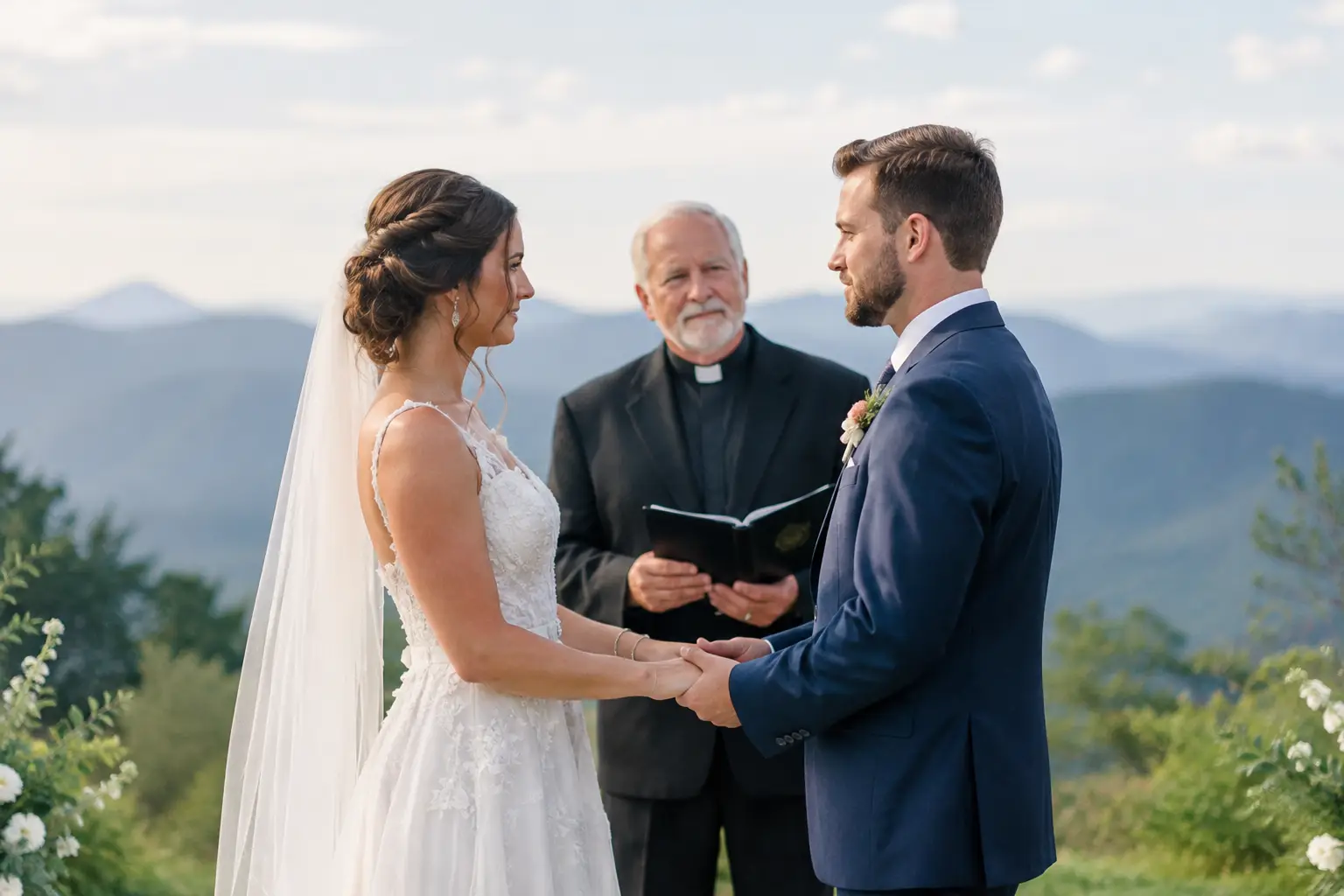
A wide Texas sky, a ranch gate, boots in the dirt, and the people who raised you gathered close – an outdoor wedding already carries meaning before a word is spoken. The question of an outdoor wedding pastor versus officiant is not only about who signs the marriage license. It is about who will stand with you before God, honor the commitment you are making, and lead a ceremony that feels true to your faith and your way of life.
For many couples, the right answer is a pastor who is also legally able to officiate. But that is not the only good choice. Your beliefs, your ceremony plans, state requirements, and the kind of support you want before and after the wedding all matter.
What Is the Difference Between a Pastor and an Officiant?
An officiant is the person authorized to conduct a wedding ceremony and complete the legal portion of the marriage. That person may be a judge, justice of the peace, ordained minister, religious leader, or a nonreligious professional officiant, depending on state law.
A pastor is a spiritual shepherd. A pastor may also be an authorized officiant, but the role goes further than making the ceremony official. A Christian pastor can pray with you, speak from Scripture, explain the covenant of marriage, and lead a service centered on Christ rather than simply moving through a ceremony script.
That difference matters most when faith is not just a decoration on the wedding day. If you want prayer over your marriage, biblical counsel, worship, or a message that speaks plainly about the lifelong promise you are making, a pastor brings a different kind of presence.
At the same time, not every pastor is available for weddings, and not every officiant shares your beliefs or understands a Western, rural setting. The title alone does not tell you everything. Ask about the person’s approach, experience, and legal authorization.
Outdoor Wedding Pastor Versus Officiant: Start With Your Priorities
A good place to begin is with a simple question: What do you want your marriage ceremony to say?
If you want a short civil ceremony with a few personal vows, a nonreligious officiant may be a fine fit. Some couples want a simple, meaningful service without a sermon, Scripture, or religious language. An experienced officiant can keep that moment organized, warm, and focused.
If you want your ceremony to reflect Christian faith openly, a pastor is usually the stronger choice. A pastor can help you build the service around prayer, Scripture, worship, and the biblical meaning of covenant. He can speak to the fact that marriage is more than a public celebration. It is a promise made before God and witnessed by the people who love you.
For couples from the cowboy church, ranching, rodeo, or country community, the best pastor will not force a formal church style onto an outdoor gathering. A barn, pasture, arena, family ranch, or country venue can be a reverent place to marry. Real faith with a country heart belongs wherever people come together honestly before the Lord.
A pastor offers spiritual care, not just ceremony direction
There is a practical side to every wedding. Someone has to tell the wedding party when to step forward, guide the vows, and make sure the license is completed correctly. A capable pastor can handle those details.
But pastoral care reaches beyond the schedule. Many couples appreciate meeting beforehand to talk about their story, their hopes, and the strength it takes to build a marriage that lasts. They may want prayer for a blended family, healing from past hurts, peace in a stressful season, or wisdom as they begin a new home together.
That does not mean every couple needs lengthy premarital counseling, and it does not mean a pastor will make your ceremony feel stiff or overly formal. It means you have the opportunity for a deeper kind of guidance if you want it.
An officiant may offer flexibility in format
A professional officiant often specializes in customized ceremonies. They may be especially helpful when a couple comes from different faith backgrounds, prefers a fully secular service, or wants a ceremony built mainly around personal storytelling.
Some officiants are excellent at creating relaxed, heartfelt moments. Others use standard scripts with only small changes. Before hiring one, ask to see a sample ceremony or talk through the kind of language they use. You should never be surprised by the tone of the words spoken at your own wedding.
If Christian faith is central to your life, do not assume an officiant will naturally include it. Be clear about whether you want prayer, Scripture, mentions of Jesus Christ, a blessing over the marriage, or traditional Christian vows.
Legal Authority Comes First
A beautiful ceremony does not protect you from a paperwork problem. Before you make a decision, confirm that the pastor or officiant can legally perform weddings where your ceremony will take place.
Marriage laws vary by state and sometimes by county. Requirements can involve the marriage license, identification, witnesses, the timing of the ceremony, and how quickly the completed license must be returned. In many places, ordained ministers can officiate legally. In others, particular rules may apply.
Do not leave this question until the rehearsal. Ask directly: “Are you authorized to perform a legal marriage in this state, and will you complete and return the license according to local requirements?” A trustworthy pastor or officiant will answer plainly and help you understand what you are responsible for.
You and your future spouse should still check with the county clerk or issuing office yourself. The couple is ultimately responsible for obtaining the license on time and bringing it to the ceremony if required.
Outdoor Weddings Need a Steady Hand
Outdoor weddings are memorable because they are alive. The wind may pick up. Horses may sound off at the wrong moment. The sun may be strong, the ground may be uneven, and the sound system may decide it has other plans.
That is why outdoor experience matters. The person leading your ceremony should be calm when conditions are not perfect. A good pastor or officiant does not panic if a microphone fails or a rain plan has to be used. He knows the point is not flawless production. The point is the promise you are making.
Still, planning ahead honors your guests and protects the moment. Talk through the ceremony site, where everyone will stand, how guests will hear, what happens in bad weather, and whether the officiant needs a microphone. If you are getting married at a ranch or arena, consider traffic flow, parking, dust, livestock, and the time of day.
A sunset ceremony is beautiful, but it can also put the sun directly in your eyes. A pasture may look level until Grandma tries to cross it in dress shoes. These are small matters, yet they can make a big difference in how peaceful the day feels.
Questions Worth Asking Before You Book
Whether you choose a pastor or another officiant, have an honest conversation before you set the date. Four questions can save a lot of uncertainty:
- Are you legally authorized to officiate our wedding at this location?
- Will you include prayer, Scripture, a message, or Christian vows if we request them?
- Can we meet beforehand to discuss our ceremony and marriage?
- What is your plan if weather, sound, or venue conditions change?
You can also ask about attire. For a Western wedding, some couples want the pastor in a hat, boots, and jeans, while others prefer a suit or a more traditional look. There is no one right answer. The goal is for the person standing with you to respect the occasion and fit the setting without becoming the center of attention.
When a Pastor Is the Better Fit
A pastor is often the right choice when your wedding is part of a larger commitment to follow Christ together. You may want someone who knows your family, understands cowboy church culture, or can speak the truth of Scripture in plain language without putting on a performance.
This can be especially meaningful for couples marrying at a ranch, a rodeo venue, a family property, or a country chapel. Those places hold stories. A pastor who respects that heritage can connect the setting to the sacredness of the moment without making it feel scripted or artificial.
Burleson Cowboy Ministries serves couples looking for that kind of personal, Christ-centered care – ministry that can meet folks where they gather, whether that is a church, barn, ranch, or outdoor venue.
Let the Ceremony Match the Marriage You Want to Build
Your wedding day will go by fast. The photos, flowers, boots, and celebration matter, and they should be enjoyed. But the words spoken in those few minutes can stay with you for years, especially when life gets hard and you remember the promise you made.
Choose the person who can lead that moment with honesty, legal care, and the kind of faith that feels at home under an open sky. A strong marriage is built one faithful day at a time, and a good ceremony can point your first day in the right direction.


