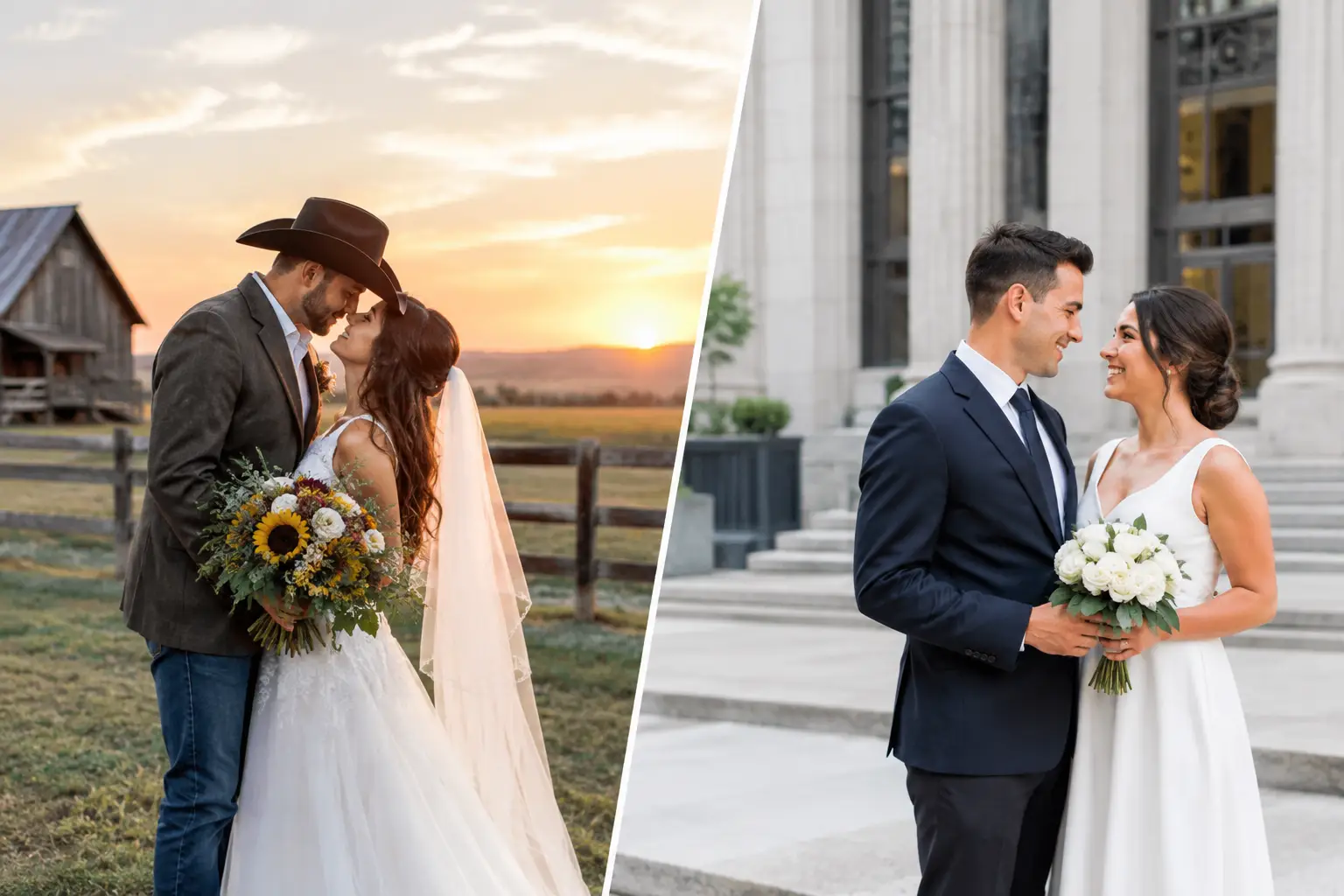
A marriage begins long before the photographs, the boots, or the paperwork. When couples weigh a ranch wedding vs courthouse ceremony, they are often deciding what kind of beginning feels honest to their story. For some, that means standing beneath an old oak with family gathered close, horses in the pasture, and the Word of God spoken plainly. For others, it means a quiet courthouse room, a signed license, and the freedom to start married life without a big production.
Neither choice makes a marriage more real. The covenant is not measured by the size of the guest list or the price of the reception. Still, the setting matters because it shapes the memories you carry and the people who get to witness your promises.
Ranch Wedding vs Courthouse: Start With What Matters
A courthouse ceremony is usually about simplicity. It can be a wise choice for a couple with a tight budget, a short timeline, military orders, family circumstances, or a desire to keep the day private. You handle the required license, appear before the appropriate official, and are legally married with little fuss.
A ranch wedding makes room for something different. It gives a couple the chance to gather their people in a place that feels like home. A working ranch, barn, arena, pasture, or family property can carry history that no formal venue can copy. Maybe it is where he learned to rope, where she grew up riding, or where grandparents built a life through hard work and faith. That kind of place has a voice of its own.
The question is not, “Which option is better?” The better question is, “What will help us begin this marriage with honesty, peace, and the right priorities?” If a ranch celebration would create debt, family strain, or pressure to perform, smaller may be wiser. If a courthouse ceremony would leave you wishing the people who raised and supported you had been there, it may be worth making room for a meaningful gathering.
The Legal Side and the Covenant Side
A courthouse wedding is designed around the legal side of marriage. That matters. A marriage license, the required witnesses where applicable, and a properly authorized officiant are not details to leave until the last minute. Rules differ by state and county, so couples should check local requirements before setting a date.
But Christian couples also recognize a deeper truth: marriage is a covenant before God. It is more than a contract or a change in legal status. Scripture calls a husband and wife to faithful, sacrificial love, to leave and cleave, and to walk through life as one flesh.
A ranch ceremony can make room to speak to that covenant in a personal way. You can choose Scripture that has carried your family through hard seasons. You can pray over the couple. You can ask parents, children, or trusted friends to stand nearby. You can say vows that sound like you, while still holding tight to the serious promises marriage requires.
That does not mean God is absent from a courthouse. A husband and wife can pray together on courthouse steps and mean every word. Yet couples who want biblical counsel, prayer, and a ceremony rooted in their country way of life may find that a ranch setting gives the day more breathing room for faith.
Cost Is More Than a Price Tag
Many couples assume a courthouse ceremony is always cheap and a ranch wedding is always expensive. Often that is true, but not always.
A courthouse ceremony can keep expenses low because there may be no venue rental, catered meal, decorations, or entertainment. For couples saving for a home, paying down debt, or rebuilding after a hard season, that simplicity can be a responsible decision. There is no shame in choosing a modest start.
A ranch wedding can also be practical when a family already has land or access to a barn, arena, or outdoor space. But couples should be clear-eyed about what the setting needs. Seating, shade, restrooms, parking, sound equipment, food service, lighting, weather plans, and cleanup all take time and money. A beautiful field becomes less charming if Grandma has nowhere to sit out of the August heat.
Keep the focus on what serves your marriage, not what impresses folks online. You do not need custom signs, a choreographed entrance, or a spread big enough to feed three counties to honor your wedding day. Good food, a safe place for guests, sincere vows, and people who love you will carry more weight than expensive extras.
Guest List, Family, and Community
One of the clearest differences between a ranch wedding and a courthouse ceremony is who gets to be part of it.
At the courthouse, the gathering may be just the two of you, a couple of witnesses, and a few close family members. That intimacy can be a blessing, especially for couples who dislike attention or are navigating complicated family relationships. A private ceremony can protect the peace of the day.
A ranch wedding usually invites a wider circle. In the cowboy church community, people often show up for one another. They have prayed through your hard days, helped work cattle, hauled a trailer, watched your kids, and encouraged you when life was not easy. Letting that community witness your vows can be a powerful reminder that marriage is not meant to be carried alone.
Still, bigger is not automatically better. Invite people because they have a place in your life, not because you feel obligated. A wedding is not a test of popularity. It is a holy moment, and the folks around you should help keep it that way.
When a Small Ceremony Is the Right Call
Sometimes a courthouse wedding is the most peaceful and faithful choice. A couple may be facing a deployment, an illness, a pregnancy, financial hardship, or a need to make things right without delay. In those cases, getting married simply and legally can be a strong, mature step.
You can always celebrate later. Have a ranch blessing, family meal, or anniversary gathering when the timing is better. The first day of marriage does not have to carry every dream you have ever had about a wedding.
When a Ranch Ceremony Is Worth the Work
A ranch wedding is worth the planning when the setting truly reflects who you are and gives your marriage a meaningful foundation. It works especially well for couples who want faith to be spoken openly, family traditions to be honored, and their community to take part in the day.
An outdoor ceremony also calls for practical wisdom. Have a weather plan. Make sure older guests can get around safely. Keep water available, especially in Texas or Oklahoma heat. Think about wind, mud, livestock, insects, and sound. Country folks know weather can turn on a dime, so prepare without letting the possibility of a storm steal your joy.
Choose an Officiant Who Knows Your Heart
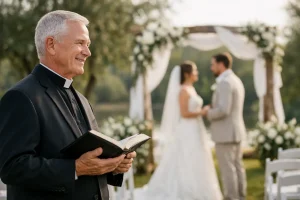
Whether you marry at the courthouse, in a barn, or under a wide Texas sky, the person leading the ceremony matters. You need more than someone who can read a script. You need an officiant who understands that marriage is sacred, who will speak truth with grace, and who can make the service feel personal rather than borrowed.
For couples who want real faith with a country heart, a cowboy church minister can bring biblical teaching and a Western way of speaking that feels natural to the setting. Burleson Cowboy Ministries serves couples who want prayer, Scripture, and a Christ-centered ceremony without losing the ranch and rodeo roots that shaped them.
Before the day arrives, talk honestly with your officiant about your testimony, your hopes, and any family details that matter. Ask what will be required for the legal paperwork. Discuss vows, Scripture, premarital counsel, and the tone of the ceremony. The best wedding words are not fancy words. They are true words.
Do Not Let the Wedding Outgrow the Marriage
There is a lot of pressure to make a wedding look a certain way. Social media can make a simple courthouse ceremony seem too plain and a ranch wedding seem like it needs to belong in a magazine. That pressure can pull a couple away from the reason they are standing together in the first place.
Your wedding day is important, but it is one day. Marriage is the long trail afterward: early mornings, bills, disagreements, sickness, church, work, forgiveness, raising children if God blesses you with them, and choosing love again and again. A good ceremony points toward that life. It does not compete with it.
If you choose the courthouse, let it be simple on purpose. If you choose the ranch, let it be meaningful without becoming burdensome. Say your vows with clear eyes, hold hands when the day gets busy, and remember that God is far more interested in the faithfulness of your marriage than the setting of your ceremony.