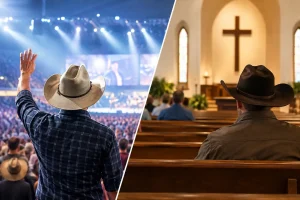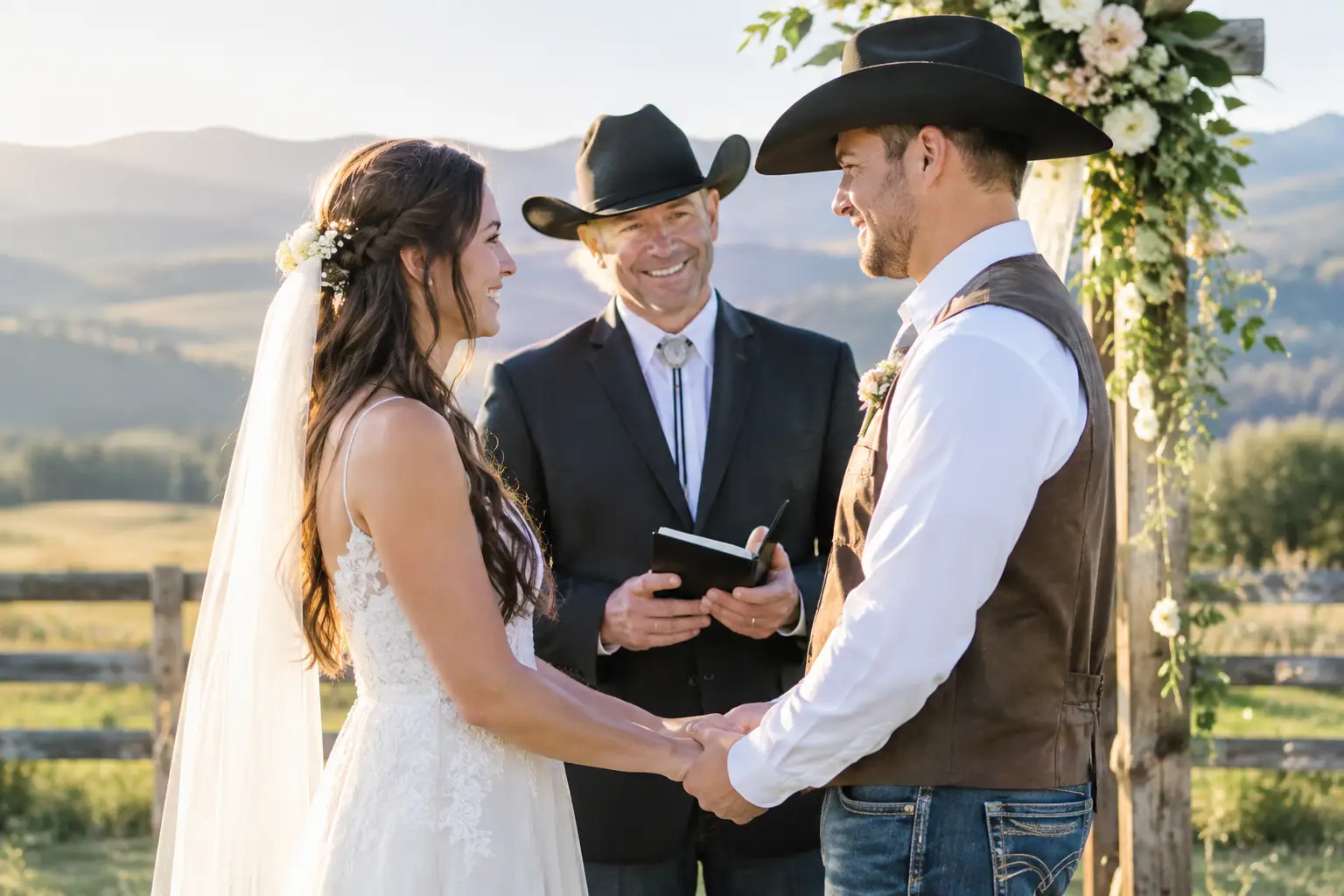
A wedding can happen beneath a barn roof, beside a weathered fence line, or under a wide Texas sky – but the covenant being made is still holy. This western wedding ministry example is for couples who want their ceremony to feel true to their country way of life while keeping Christ at the center of it all.
A Western wedding does not need a lot of fancy words to carry deep meaning. It needs honesty, Scripture, prayer, and a minister who understands that boots, hats, horses, and family traditions are not decorations to you. They are part of your story. The goal is not to make a church service look country. The goal is to honor God in a ceremony that feels like home.
What Makes a Western Wedding Ministry Different?
A faith-centered Western wedding starts with the same truth as any Christian marriage: a husband and wife are making a lifelong covenant before God. The setting may be a ranch, an arena, a pasture, a small chapel, or a family property. The music may include an acoustic guitar, an old hymn, or a country worship song. Still, the heart of the ceremony is the promise being made.
That is why the best ceremonies leave room for both reverence and personality. A couple may want the groom in a good hat and pressed jeans, the bride in lace and boots, and the wedding party gathered around a wooden cross. Those details can be meaningful. But the minister should also make sure the moment points beyond the day itself and toward the hard, beautiful work of building a Christian home.
A good officiant will take time to learn your story. Maybe you met at a rodeo, grew up in the same small town, or found each other after difficult seasons. Maybe you are raising children already, working long ranch hours, or bringing two families together. Your ceremony should not sound like it was handed to every couple who came before you.
A Western Wedding Ministry Example Ceremony
The following example can be shaped for a ranch wedding, barn wedding, outdoor ceremony, or cowboy church gathering. It is plainspoken by design, but it carries the weight of the promises being made.
Opening Words
“Family and friends, we have gathered here today in the presence of God to witness and celebrate the joining of this man and this woman in holy marriage.
“We are gathered in a place that reflects the life they love – a life built around hard work, loyalty, family, and faith. Yet even more than the ground beneath our feet or the people standing beside them, this moment belongs to the Lord.
“Marriage is not simply a promise made when the weather is good and the trail is easy. It is a covenant. It is choosing one another through long days, hard seasons, unexpected turns, and every blessing God provides. Scripture tells us that two are better than one, because they have a good reward for their labor. And when one falls, the other is there to help them up.”
Prayer for the Couple
“Let us pray.
“Lord, we thank You for bringing these two together. Thank You for the people who raised them, encouraged them, and prayed for them. We ask that You bless this marriage with patience when life gets hard, laughter when the days are long, wisdom when decisions must be made, and grace when either one falls short.
“Help them keep You at the center of their home. Teach them to love one another with a faithful, steady love that reflects Your love for us. In Jesus’ name, amen.”
Charge to the Bride and Groom
“Before you make these vows, remember that love is more than a feeling. Feelings matter, but a strong marriage is built on choices made day after day.
“Choose kindness when you are tired. Choose forgiveness before bitterness takes root. Choose to speak truth with love. Pray together. Stand together. When trouble comes, do not turn against each other. Turn toward the Lord and face it side by side.
“A good horse is trusted over miles of trail, not just in the pen. In the same way, a marriage grows strong through faithfulness over time. Today is the beginning, but the real beauty of this covenant will be seen in the years ahead.”
Declaration of Intent
“[Groom], do you take [Bride] to be your wife? Do you promise before God and these witnesses to love her, honor her, serve her, and remain faithful to her for as long as you both shall live?”
The groom responds: “I do.”
“[Bride], do you take [Groom] to be your husband? Do you promise before God and these witnesses to love him, honor him, serve him, and remain faithful to him for as long as you both shall live?”
The bride responds: “I do.”
Vows
The couple can repeat traditional vows or speak personal vows they have prepared. For many country couples, a simple vow carries plenty of strength:
“Before God, I take you to be my husband/wife. I promise to walk beside you through every season, to honor you, encourage you, and pray for you. I will be faithful to you in joy and hardship, in plenty and in need, for as long as we both shall live. With God’s help, I give you my heart and my life.”
Rings and Blessing
“The rings you give and receive today are a visible reminder of a promise without end. Their circle has no beginning and no end, just as you are called to keep choosing this covenant all the days of your life.
“[Groom], place this ring on [Bride’s] hand and repeat after me: With this ring, I give you my love, my faithfulness, and my promise before God.”
“[Bride], place this ring on [Groom’s] hand and repeat after me: With this ring, I give you my love, my faithfulness, and my promise before God.”
Pronouncement
“Since you have made your vows before God and these witnesses, and have given and received rings as a sign of your covenant, it is my honor to pronounce you husband and wife.
“What God has joined together, let no one separate.
“You may kiss your bride.”
Make the Ceremony Yours Without Losing Its Meaning
The example above is a starting place, not a script carved in stone. Some couples want a unity rope, a Bible presentation, a family prayer circle, or a communion moment. Others want a shorter ceremony because the wedding is outdoors in summer heat or because they have a large gathering waiting for the reception.
There is no single right length. A ceremony can be meaningful in fifteen minutes or take longer if worship, family participation, and personal testimony are part of the plan. What matters is that every addition serves the covenant instead of distracting from it.
If children are joining the new family, consider including them in a prayer or blessing. If a grandfather, parent, or mentor has been a major spiritual influence, ask them to read Scripture. These touches often mean more than elaborate staging because they show the community surrounding the couple with love and accountability.
Practical Details Couples Should Settle Early
Before the wedding day, speak clearly with your officiant about the ceremony order, the names to use, personal vows, music, and whether there will be a rehearsal. Outdoor weddings also call for a backup plan. Wind can carry away your words, rain can change the schedule, and an arena or ranch setting may have noise you cannot control.
Be sure the legal side is handled as well. Marriage license requirements, deadlines, witnesses, and who may officiate vary by state and county. A meaningful Christian ceremony and a legally completed marriage should go hand in hand, so do not leave the paperwork until the last minute.
A minister can also help you think through the bigger questions before the wedding. Have you talked about faith, finances, family boundaries, church involvement, work demands, and how you will handle conflict? Premarital conversations may not make for flashy wedding photos, but they can prepare you for the life you are promising to build.
Your wedding day will pass faster than you expect. The flowers will fade, the boots will get dusty, and the crowd will head home. But a marriage surrendered to God can stand firm through every changing season. Start your covenant with honest vows, steady faith, and the kind of love that keeps showing up when the trail gets rough.