A lot of folks asking what is a cowboy minister are not looking for a fancy definition. They are usually trying to figure out whether this is a real pastor, what kind of ministry he does, and whether he understands the way country people actually live. Fair question. If your life happens around ranch work, rodeo weekends, stock shows, horses, long workdays, and small-town ties, you want spiritual leadership that feels honest and familiar.
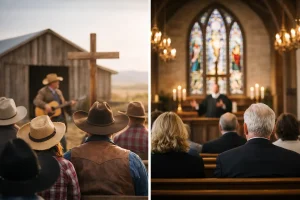
A cowboy minister is a Christian minister who serves people in the cowboy, ranching, rodeo, and rural community with biblical teaching, pastoral care, and personal presence. He may preach in a cowboy church, at an arena, in a barn, under an open sky, or wherever people gather. The setting may look different from a traditional church, but the mission is the same – preach the Gospel, care for people, and point hearts toward Jesus Christ.
What Is a Cowboy Minister in Real Life?
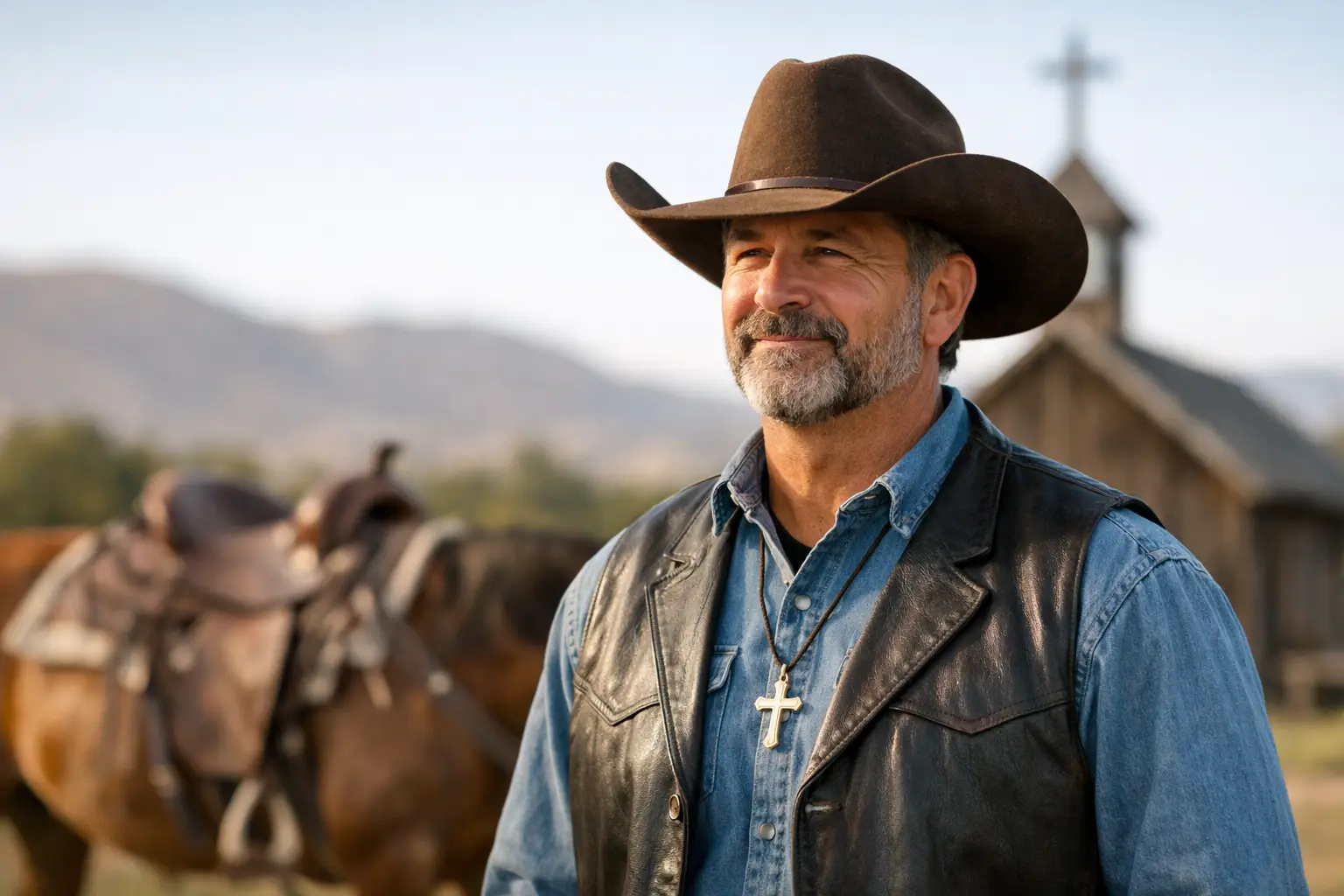
In real life, a cowboy minister is not a novelty and not a costume. He is not trying to turn the Christian faith into a Western theme. He is a minister who understands a specific community and brings God’s Word into that community in a way that speaks its language.
That matters more than some people realize. Rural folks, rodeo families, and working cowboys often live on schedules that do not fit neatly into polished church routines. Calving season does not pause for convenience. Rodeo travel can keep families on the road. Some people feel out of place in formal church settings, not because they do not believe, but because they feel like outsiders the minute they walk in.
A cowboy minister meets people where they are, both spiritually and physically. He may wear boots and a hat, but that is not what makes him a cowboy minister. What makes him one is a calling to serve this community with biblical truth, compassion, and cultural understanding.
More Than Preaching in Boots
People sometimes think a cowboy minister is just a preacher with Western style. That sells the role short.
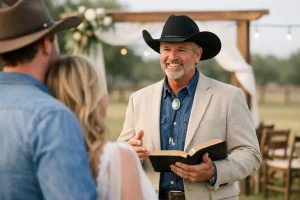
A true cowboy minister often handles many of the same responsibilities as any pastor. He preaches, prays, counsels, officiates weddings, helps families through funerals, encourages people in crisis, and walks with folks through hard seasons. The difference is that he does this in a way that respects the values, pace, and daily realities of cowboy life.
He may speak more plainly than academically. He may preach at a ranch gathering or fill in for a cowboy church on a Sunday morning. He may spend one day helping a grieving family prepare a funeral and another day praying with a couple getting married in a pasture, barn, or outdoor venue. The work is practical because people’s needs are practical.
That practical side is a big part of why cowboy ministry means so much to the people it serves. It is not ministry from a distance. It is relational, personal, and present.
Where a Cowboy Minister Serves
A cowboy minister is often mobile by necessity. He may serve in places that feel natural to the people he is called to reach.
That can mean cowboy churches, rodeo grounds, ranches, livestock barns, private homes, fairgrounds, outdoor arenas, funeral gatherings, hospital rooms, and community events. Some cowboy ministers travel regularly because the people they serve are spread out across wide country. Others work closely with one church while also helping neighboring communities.
This kind of ministry does not treat a church building as the only place where ministry can happen. It recognizes that for many rural families, life happens outside. Faith needs to be present there too.
There is a trade-off, of course. A mobile ministry can feel less structured than a traditional church model. Some people want a fixed weekly rhythm, a sanctuary, and a full church staff. Others need a ministry that can come to the sale barn, the arena, or the graveside. A cowboy minister often serves people who might otherwise go without pastoral care at all.
What a Cowboy Minister Believes and Teaches
At the center of cowboy ministry should be the same foundation that ought to guide any Christian minister – the Bible, the Gospel, and the call to shepherd people faithfully.
The Western setting should never replace biblical truth. It should simply provide a familiar doorway for hearing it. A cowboy minister who is doing the work right is not preaching cowboy culture as salvation. He is preaching Jesus Christ to people inside cowboy culture.
That means teaching about sin and grace, repentance and forgiveness, salvation through Christ, prayer, discipleship, marriage, family, grief, hope, and the need for a real walk with God. The style may be plainspoken, but the message should still be solid.
This is where discernment matters. Not every ministry that looks country is automatically grounded. If someone is asking what is a cowboy minister because they are looking for one, it is wise to ask simple questions. Does he preach the Bible clearly? Does he care for people well? Is he faithful in both public ministry and private character? Does he point people to Christ, or mostly to personality and image?
Why Cowboy Ministry Matters
For a lot of folks in ranching and rodeo life, the value of a cowboy minister is simple. He gets it.
He understands early mornings, hard ground, uncertain weather, physical work, financial pressure, livestock loss, family loyalty, and the strong independent streak that can make it hard to ask for help. He knows that country people are often generous, resilient, and deeply committed, but also just as vulnerable to heartbreak, addiction, isolation, and spiritual drift as anybody else.
Because he understands the culture, he can often speak into people’s lives without making them feel judged from the outside. That does not mean he waters down truth. It means he delivers it with credibility and respect.
There is also something powerful about ministry that shows up in the middle of real life. A funeral for a rancher, a wedding for a country couple, a prayer before an event, a message preached in an arena where families already gather – these moments remind people that God is not limited to one kind of place.
Is a Cowboy Minister Different From a Traditional Pastor?
Sometimes yes, sometimes no.
In terms of core calling, a cowboy minister and a traditional pastor should have a lot in common. Both are meant to shepherd people, teach Scripture, and serve faithfully. The biggest difference is usually context.
A traditional pastor may serve mainly inside one established church setting. A cowboy minister may work across multiple locations, fill pulpits, travel to events, and minister in less formal spaces. He may also connect more naturally with people who have felt disconnected from standard church culture.
Still, cowboy ministry is not better just because it is more rural, and traditional ministry is not better just because it is more established. Different communities need different approaches. What matters is whether the ministry is biblical, sincere, and effective in reaching people.
Who Turns to a Cowboy Minister?
The answer is broader than some people expect. It is not only working cowboys.
Rodeo families, ranch owners, horse trainers, blue-collar workers, small-town families, country couples planning a wedding, grieving relatives preparing a funeral, and believers looking for a guest preacher at a cowboy church may all turn to a cowboy minister. Some have been in church their whole lives. Others have stayed away for years and are more willing to talk with someone who feels familiar.
That familiarity can open doors. A person who would never schedule time with a formal pastor may sit down with a cowboy minister over coffee, by a trailer, or after an event and finally speak honestly about what is weighing on their heart.
That is often where the real work begins.
What to Look for in a Cowboy Minister
If you are searching for one, look past appearances first. Western clothing may fit the setting, but character and doctrine matter more than style.
Look for someone who handles Scripture faithfully, speaks with humility, shows up when people are hurting, and cares more about serving than performing. A cowboy minister should be approachable, but also spiritually steady. He should know how to comfort people without dodging truth, and preach truth without losing compassion.
That is one reason ministries like Burleson Cowboy Ministries matter to so many families. They bring real faith with a country heart into the places where people marry, mourn, worship, and need prayer most.
So what is a cowboy minister? He is a servant of God called to carry the Gospel into the cowboy world with honesty, grit, and grace. And for plenty of folks across ranch country, that kind of ministry does not feel unusual at all. It feels like home.