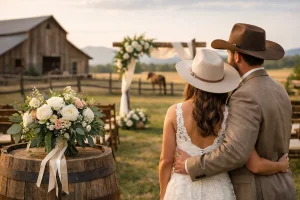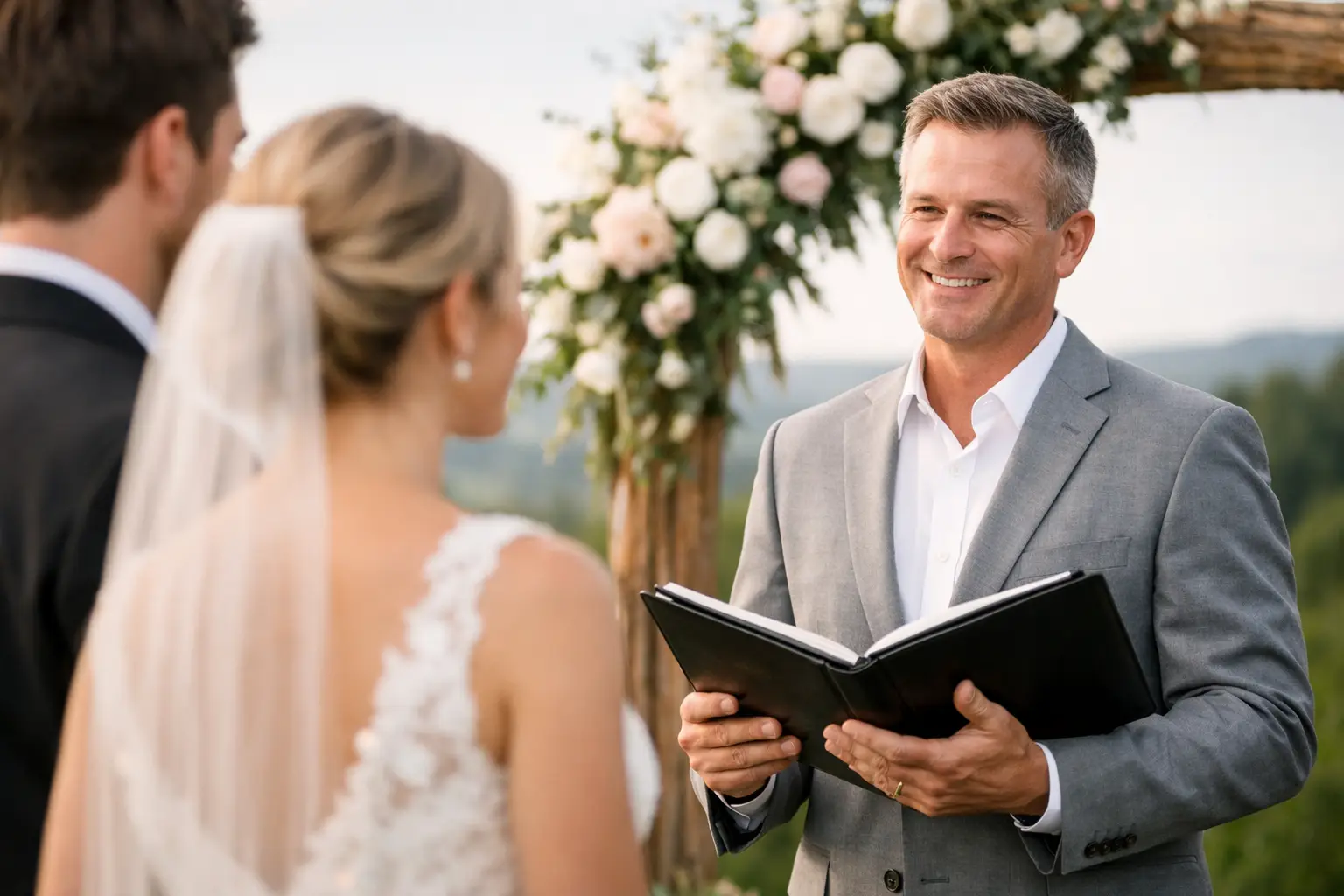
Some weddings feel right in a chapel. Others feel right under an open sky, with boots in the dirt, horses in the background, and family gathered close. In that kind of setting, a western wedding officiant is not just there to speak a few words. He helps set the tone for a ceremony that honors your faith, your values, and the life you are building together.
For many couples in ranching, rodeo, and rural communities, the ceremony matters just as much as the celebration after it. You want something personal, but not showy. You want it heartfelt, but still grounded. And if your faith is central to your life, you want the person leading your wedding to understand that marriage is more than a moment. It is a covenant before God.
What a western wedding officiant really brings
A good officiant does more than keep the ceremony moving. He helps create a wedding that sounds like you, fits your setting, and reflects what you believe. That matters even more in a Western wedding, because these ceremonies often happen outside the usual mold.
A barn wedding, ranch wedding, backyard ceremony, arena setup, or open pasture event has its own rhythm. It may include prayer, Scripture, family traditions, and country details that would feel out of place in a more formal setting. A western wedding officiant knows how to bring those pieces together without making the ceremony feel forced or theatrical.
That is the difference couples often notice right away. The right officiant does not treat your wedding like a script he has repeated a hundred times without thought. He pays attention to your story, your comfort level, your family dynamics, and your shared beliefs. He knows when to keep things simple and when to pause long enough for the moment to settle in.
Faith should feel natural, not rehearsed
For Christian couples, one of the biggest questions is how much faith to include in the ceremony. The answer depends on the couple, but it should never feel tacked on. Prayer, biblical truth, and a clear message about marriage should fit the ceremony in a way that feels honest.
That is especially true in the cowboy and country community. Folks can tell when something is real, and they can tell when it is put on for appearances. A western wedding officiant who understands rural life and Christian conviction can speak plainly about love, commitment, sacrifice, and the Lord’s place in marriage without sounding polished for the sake of being polished.
Simple usually works best. A short message about what marriage means in God’s eyes. Prayer over the couple. Scripture that speaks to faithfulness, strength, and grace. Words that sound like they belong in that place, with those people, on that day. That kind of ceremony stays with folks.
Why cultural fit matters
Not every officiant is the right fit for a Western wedding, even if he is experienced. Some do well in formal venues with traditional pacing and a more polished presentation. There is nothing wrong with that. It is just not always what a country couple is looking for.
A Western wedding often calls for someone who understands the community from the inside. That means knowing the difference between country style and country life. It means being comfortable around ranch families, rodeo people, working hands, and folks who value sincerity over performance.
When the officiant fits the culture, the ceremony relaxes. The couple does not feel like they have to explain themselves. The family does not feel like the service was borrowed from somewhere else. Everything feels more settled, more personal, and more respectful of the life the couple actually lives.
What to ask before you book a western wedding officiant
Choosing the right officiant is not only about availability. It is about trust. Before you book, it helps to ask a few honest questions.
Ask how he approaches Christian wedding ceremonies. Some couples want strong biblical content. Others want faith clearly present but kept shorter for a mixed crowd. A good officiant should be able to explain how he handles both without watering down the meaning of marriage.
Ask whether he is comfortable traveling to your location. Many Western weddings happen on private land, at barns, at event spaces outside town, or in places where conditions are not perfect. You need someone who is prepared for that and not thrown off by weather, animals, dust, uneven ground, or a setting that is a little off the beaten path.
Ask how personalized the ceremony will be. Some couples want help writing vows. Some prefer traditional vows. Some want to include a family prayer or a special mention of parents, children, or loved ones who have passed on. The officiant should be able to guide those decisions with a steady hand.
And ask something simple but important – whether he sees officiating as a job to complete or a ministry to offer. That answer tells you a lot.
The ceremony should match the marriage you want to build
A wedding can be beautiful without being complicated. In fact, many of the strongest ceremonies are the ones that stay focused on what matters most. The vows are clear. The message is biblical. The tone is warm and steady. The couple is seen, prayed over, and sent forward with blessing.
That does not mean every ceremony should look the same. Some couples want a short service before a big celebration. Others want a more worship-centered ceremony with prayer, Scripture, and a fuller message. Some are blending families and need the moment handled with special care. Some are young and just starting out. Others are getting married later in life after walking through hard seasons.
A good western wedding officiant knows that no two stories are exactly alike. He does not flatten every wedding into the same template. He also does not turn the ceremony into a production. He listens, offers guidance, and keeps the focus where it belongs.
A western wedding officiant should bring calm to the day
Wedding days can get busy fast. Timelines shift. Guests run late. Wind picks up. Sound systems act up. Someone cannot find the rings for five minutes and everybody starts looking at each other. That is real life.
The officiant should be one of the calmest people there.
That calm matters more than couples sometimes realize. The person leading the ceremony helps steady the room. His voice, posture, and presence all shape the moment. If he is relaxed, prepared, and grounded in what he is there to do, it helps everyone else settle down too.
This is one reason many couples prefer a pastor or ministry leader who has spent time serving people through all kinds of life moments, not just weddings. Someone who has preached in open-air settings, prayed with families in hard times, and shown up for people where they are often carries a different kind of steadiness.
That is part of why ministries like Burleson Cowboy Ministries connect so naturally with Western couples. The ceremony is not treated like a performance. It is treated like a sacred moment in real people’s lives.
Country style is good, but substance matters more
There is nothing wrong with wanting a wedding that reflects your Western roots. Boots, denim, hats, horses, old wood, open land, and a country crowd can make for a beautiful day. But the ceremony itself still needs substance.
That is where couples should be careful. It is easy to spend months planning the look of the wedding and only a few minutes thinking about the words that will be spoken over the marriage. The style should support the moment, not replace it.
A strong officiant helps keep that balance. He can honor the Western setting while still bringing the kind of truth and gravity that marriage deserves. He does not need to overcomplicate it. He just needs to be clear, faithful, and real.
When couples remember that, the ceremony becomes more than a backdrop for photos. It becomes the heart of the day.
Finding the right fit for your day
The best choice is usually not the person with the fanciest delivery. It is the one who understands your values, respects your setting, and can speak into your marriage with honesty and care. If you want Christ at the center, that should be clear. If you want a ceremony that feels at home in a ranch, barn, or country venue, that should be natural too.
A western wedding officiant should be able to stand in both places at once – rooted in biblical truth and comfortable in the Western way of life. That combination matters because your wedding is not only about one day. It is about the foundation you are laying down in front of God, your family, and the people who know you best.
Pick someone who can speak to that with a country heart, steady faith, and words that ring true long after the chairs are folded up and the dust settles.