A ranch wedding can be one of the most meaningful ways to start a marriage, but only if it is planned with both heart and good sense. If you are wondering how to plan ranch wedding details without losing the simple beauty that drew you to it in the first place, the key is this: honor the land, care for your people, and keep the day centered on the covenant you are making before God.
A ranch is not a ballroom dressed up with Western decor. It is working ground. Animals move, weather shifts, dust shows up uninvited, and sunset does not wait for a late hair appointment. That is part of the charm, but it also means you need to plan around real conditions instead of Pinterest ideas that only work in perfect light.
How to Plan Ranch Wedding Priorities First
Before you pick rentals, flowers, or a photo backdrop, settle the big questions. What matters most to the two of you? For some couples, it is an outdoor ceremony under a big Texas sky. For others, it is making sure grandparents are comfortable, serving a good meal, and having room for dancing in the barn after the vows.
Start with your priorities, not somebody elses expectations. If your wedding is rooted in faith, make room for that from the beginning. Think about the tone of the ceremony, the scripture you want read, the kind of message you want shared, and who you trust to officiate the covenant. A ranch wedding can feel relaxed without becoming casual about what marriage means.
This part matters because every later decision will either support those priorities or pull against them. A simple, Christ-centered wedding with strong family ties should not get buried under a pile of trendy extras that wear everybody out.
Choose the Right Spot on the Ranch
Not every pretty corner of a ranch is a good event space. A field may look beautiful in engagement photos and still be a poor choice for parking, seating, or access. Walk the property with practical eyes. Ask where guests will park, how older family members will get to the ceremony site, where the sun will be during the vows, and what the ground looks like if it rains the night before.
You also need to think about sound. Open land can be peaceful, but wind can swallow every word of a ceremony. A barn can feel warm and memorable, yet it may echo badly if you do not plan for microphones and speaker placement.
The best ranch wedding locations usually balance beauty with usefulness. Shade helps. Solid footing helps. A shorter walk helps. If the site lets folks focus on the bride, groom, and the Lord instead of fighting heat, mud, or bad acoustics, you are on the right track.
Build Your Date Around Weather, Light, and Ranch Life
One of the biggest mistakes couples make when learning how to plan ranch wedding logistics is choosing a date for sentiment alone and not for conditions. On ranch property, the season changes everything. Spring can be green and beautiful, but it may also bring storms and muddy ground. Summer offers long light, though afternoon heat can be hard on guests, livestock, makeup, and food. Fall is often the sweet spot in Texas and Oklahoma, but those dates book fast.
Look at the rhythm of the ranch itself too. If the property is active, there may be times when cattle work, hay season, hunting schedules, or other ranch demands make wedding setup more difficult. A wedding should work with the place, not against it.
Time of day matters just as much. Late afternoon and early evening often give you better light and more comfortable temperatures. Midday ceremonies may sound efficient on paper, but full sun can be rough on everyone involved.
Think Through Guest Comfort Like a Good Host
Country folks are usually easygoing, but that does not mean guest comfort should be an afterthought. Hospitality is part of the witness of the day. When people feel cared for, the whole event carries more peace.
Seating is a big one. If the ceremony runs more than a few minutes, make sure there are enough chairs and stable ground beneath them. Restrooms matter too. If the ranch does not have adequate facilities nearby, quality portable restrooms are worth the investment.
Then think about heat, cold, wind, and bugs. Depending on the season, guests may need water stations, fans, shade, blankets, or insect control. Good signage also helps more than couples expect. A ranch may be familiar to the family but confusing to out-of-town guests trying to find parking, the ceremony site, and the reception area.
A little foresight goes a long way. People remember the beauty of a wedding, but they also remember whether they spent an hour sweating in the sun with no water.
Keep the Ceremony Strong and Simple
The ceremony is the center of the day. Everything else supports it. That is especially true for a faith-centered ranch wedding, where the setting may be rugged but the commitment is holy.
Choose an officiant who understands both marriage and your culture. A ranch wedding has its own feel, and it helps when the person leading it knows how to speak plainly, honor Scripture, and connect with a country crowd without turning the ceremony into a performance. If you want a message that feels biblical, personal, and at home in a Western setting, that relationship matters.
Keep the order of service clear. Scripture, vows, prayer, and a short message are often enough. You do not need to fill the ceremony with too many moving parts. Wind, nerves, and outdoor logistics can make long programs feel heavier than expected.
If worship music is part of your day, think through who is leading it and what sound equipment they need. Acoustic can be beautiful on a ranch, but only if people can hear it.
Vendors Need Ranch-Specific Direction
A talented vendor is helpful. A talented vendor who has worked on ranch property is even better. Photographers, caterers, florists, rental teams, and coordinators all need honest information about the land and setup conditions.
Tell them early if the road is rough, if power access is limited, if setup requires driving across pasture, or if cell service drops out. A ranch wedding often needs more self-sufficiency than a city venue. Vendors may need generators, extra lighting, backup cooling, or more time to load in and out.
Food is another place where practicality matters. Fancy menus can sound appealing, but ranch weddings often work best with meals that hold up well outdoors and feed people generously. Good barbecue, hearty sides, and simple desserts usually fit the setting better than delicate plated food that suffers in the heat.
Flowers should also fit the environment. Arrangements that look beautiful in an air-conditioned room may wilt fast outside. Choose designs that can handle the conditions and still feel natural to the place.
Have a Real Weather Plan
If you only have a good-weather plan, you do not have a full plan. That is the truth of outdoor weddings anywhere, but especially on ranch land.
Your backup option does not need to be glamorous. It just needs to work. A barn, covered arena, tent, or indoor hall can save the day if wind or storms move in. What matters is deciding ahead of time what conditions trigger the switch and who makes that call.
Communicate that plan clearly to your vendors and key family members. The more uncertainty you remove ahead of time, the calmer everyone stays if the forecast turns.
Sometimes the weather adds character. A little breeze, a cloudy sky, or a cool evening can make a ranch wedding feel honest and unforgettable. But there is a difference between atmosphere and hardship. Wise planning knows the difference.
Let the Western Style Be Real, Not Forced
The strongest ranch weddings do not try too hard. They already have character because the land, the people, and the way of life are real. You do not need to cover every surface in horseshoes and burlap to prove it is a country wedding.
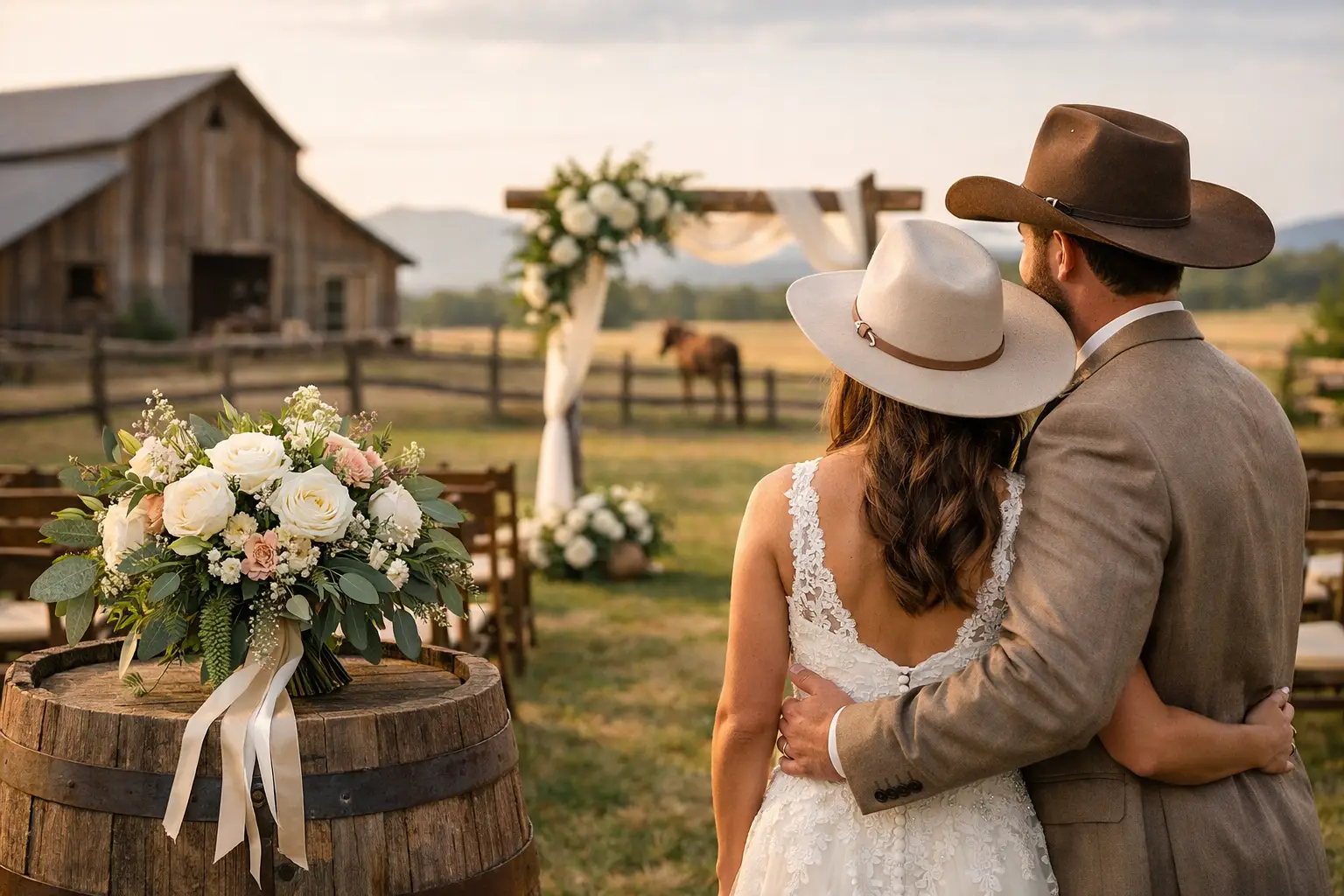
Wear what fits the setting and still feels special. The groom may be right at home in a hat and boots. The bride may choose a dress that moves well across pasture ground or barn flooring. Decor should support the place, not compete with it.
The same goes for the reception. Good music, good food, room to visit, and space for families to celebrate often matter more than elaborate design. Some couples want a polished Western look. Others want it plain and heartfelt. Either can work if it feels true to who you are.
How to Plan Ranch Wedding Without Losing the Meaning
The easiest way to lose your footing in wedding planning is to treat the wedding like a production instead of a promise. Ranch weddings have a way of cutting through that when couples let them. The setting reminds you what lasts. Land outlives trends. Family stories matter. Faith matters. The vows matter most of all.
As you make your plans, keep asking one honest question: does this decision help us begin marriage with peace, integrity, and joy? If the answer is yes, keep going. If not, it may be something you can let go.
A well-planned ranch wedding is not perfect because nothing went wrong. It is beautiful because the day reflects who you are, honors the people gathered around you, and points your first steps as husband and wife back to the Lord who brought you together. That is the kind of beginning worth building carefully.