When a ranch hand, rodeo man, horsewoman, or country patriarch passes on, families usually know right away what they do not want. They do not want a service that feels stiff, cold, or disconnected from the life that was actually lived. A cowboy funeral minister helps carry that burden by leading a service that honors Christ, respects Western heritage, and speaks in a way country families can trust.
For a lot of folks, grief comes with a second weight – making decisions while your heart is still trying to catch up. You are choosing songs, sorting stories, calling family, and trying to figure out how to honor someone who spent more time in boots than dress shoes. That is where the right minister matters. Not because he puts on a performance, but because he understands the people, the land, and the faith that shaped that person’s life.
What a cowboy funeral minister really does
At the most basic level, a cowboy funeral minister leads the funeral or memorial service. But that description barely scratches the surface. The real work starts before the service ever begins.
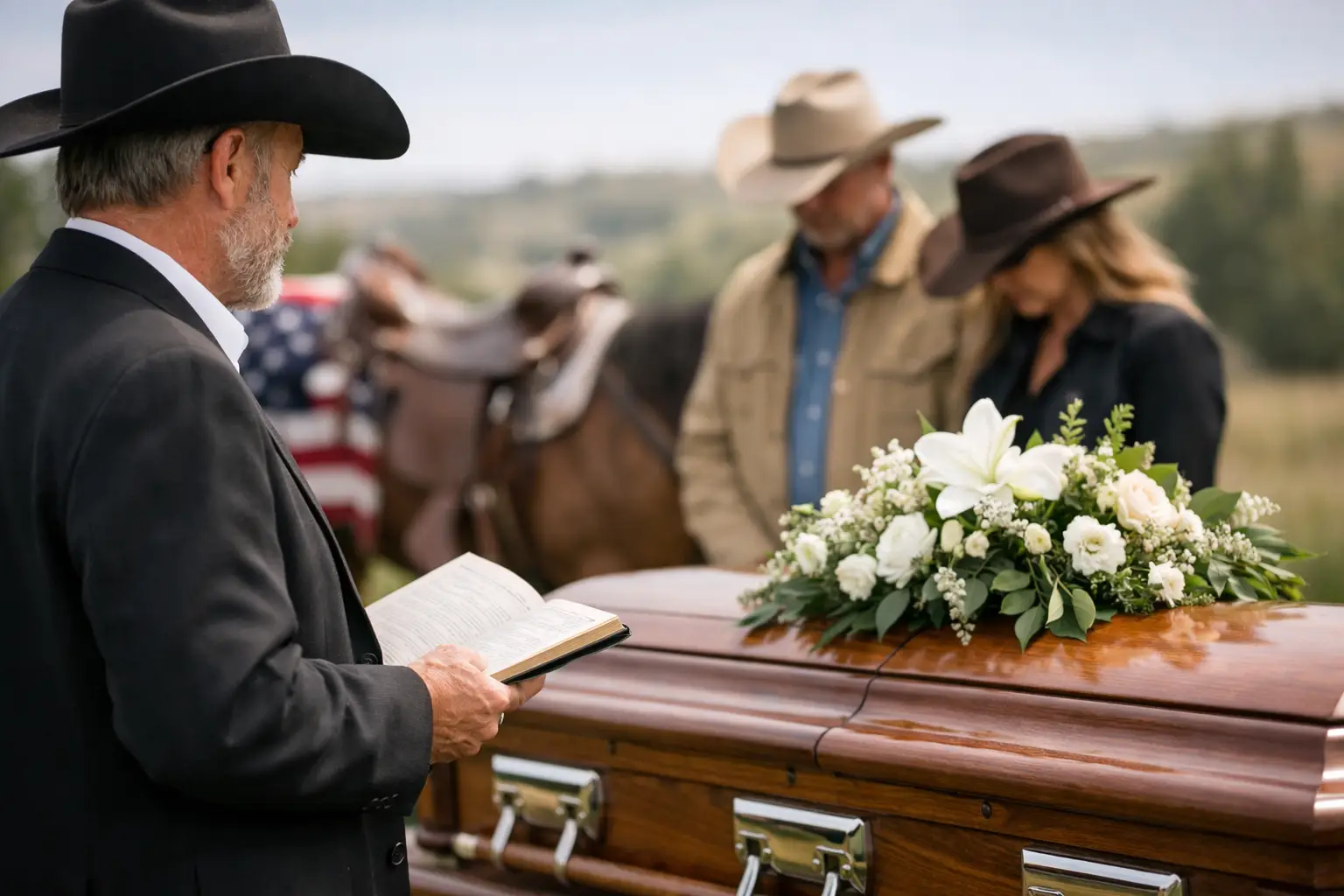
He listens to the family. He asks about the person who passed away – what they loved, what kind of work they did, where they spent their time, what kind of faith they carried, and how they treated people. In a ranching or rodeo family, those details matter. A man’s saddle, a woman’s horse, a truck parked out front, a favorite Bible verse, a hat laid across a casket – those things are not decorations. They are part of the story.
A good minister takes those details and builds a message that feels honest. He does not try to force a polished church format onto a family that lives and grieves differently. He brings biblical truth, steady compassion, and enough humility to let the life of the person speak clearly.
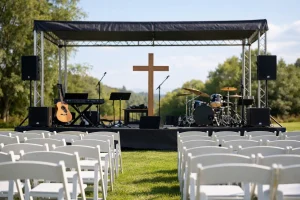
That means the service may happen in a funeral home chapel, but it may also happen in a barn, an arena, under a pavilion, on family land, or in a small country church. For many families, that flexibility is not just convenient. It is the only way the service feels right.
Why families look for a cowboy funeral minister
Western families often want someone who understands their world without needing it explained. If a preacher has to be taught why a rope, a pair of spurs, or a rider’s number matters, the family can feel that distance. It may not be anyone’s fault, but it is still felt.
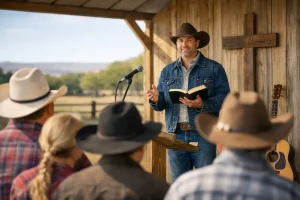
A cowboy funeral minister steps into that moment already speaking the language. He understands that rural communities often show love through action before words. He knows some of the strongest men in the room may not say much, but their grief runs deep. He understands that a service can be both simple and powerful without becoming formal for the sake of appearances.
That kind of fit matters even more when the loss comes suddenly. Ranch accidents, road accidents, illness, and the hard realities of life can leave a family shaken. In those moments, families need calm leadership. They need someone who can stand steady, open God’s Word, and help point hurting people toward the hope of Christ without sounding rehearsed.
Faith, heritage, and honesty in the service
The best funeral messages do not pretend grief is small. They also do not leave people with nothing but memories. A Christian funeral should make room for both sorrow and hope.
That is especially true in the cowboy church community, where people often value plain truth over polished words. A minister serving this audience needs to be direct. He needs to preach the gospel clearly, speak with compassion, and avoid language that feels too lofty for the room. Families do not need a lecture. They need comfort rooted in Scripture.
That can look different depending on the family. Some want a strong salvation message because faith was central to their loved one’s life. Others want a gentler tone because many people attending may not have much church background. Neither approach is automatically better. It depends on the family, the setting, and the purpose of the service.
What should stay the same is honesty. If the person loved Jesus, that should be said plainly. If they were known for grit, generosity, loyalty, or hard work, those things should be honored too. A faithful funeral message does not flatten a person into a few safe phrases. It tells the truth with grace.
What to expect when planning the service
Most families are relieved to know they do not have to have every detail figured out before reaching out. A minister can help bring order to a hard situation.
Usually, the planning starts with a conversation about the person and the family’s wishes. From there, the service may include prayer, Scripture reading, a short message, personal stories, music, and a graveside portion if needed. Some services are traditional in structure. Others are simpler and more informal. Neither one is wrong. What matters is whether the service fits the person being remembered and points people toward real hope.
There can also be practical questions that need wisdom. Should the service be indoors or outdoors? Should family members speak, or would that be too hard? Should there be a horse-led tribute, a riderless horse, or a procession with trucks and trailers? Those choices can be meaningful, but they should serve the family, not pressure them. Sometimes the most touching service is the simplest one.
A minister with experience in Western settings can help families think through those decisions without making them feel pushed. That calm guidance is part of the care.
Cowboy funeral minister services are not one-size-fits-all
One family may want a full funeral with a burial, multiple speakers, and a packed house from the local rodeo and ranching community. Another may want a small memorial a few weeks later at the home place. One service may carry strong country and cowboy elements. Another may be quieter, with those details woven in more gently.
That is why one-size-fits-all funeral ministry rarely works well in this space. Rural families tend to know when something feels forced. They also know when someone genuinely cares.
A cowboy funeral minister should be able to meet people where they are – spiritually, emotionally, and practically. Some families have deep church roots. Some have been away from church for years but still want a service grounded in biblical truth. Some are grieving with strong faith. Some are asking hard questions. Real ministry makes room for all of that.
This is also where a traveling ministry can serve families well. Not every town has a pastor who understands cowboy culture, and not every family belongs to a local church. A minister willing to come to the ranch, the arena, the funeral home, or the graveside can be a real blessing in that gap. That kind of ministry reflects the heart behind Burleson Cowboy Ministries – meeting folks where they are with real faith and a country heart.
Choosing the right minister for the family
When families are looking for someone to lead a funeral, credentials matter, but character matters more. You want a minister who is dependable, easy to talk to, respectful of family dynamics, and firm in the Word of God. You want someone who can handle sorrow without making the day about himself.
It also helps to choose someone who understands timing and tone. A funeral message should not be rushed, but it should not drag on either. Stories should be personal, not careless. Humor can be part of remembering a life, but it needs discernment. If a cowboy was known for a big laugh, stubborn grit, or a few harmless tales, those memories can help bring warmth to a hard day. But the moment still needs reverence.
Families should feel free to ask simple questions. Have you done services for ranching or rodeo families before? Are you comfortable leading an outdoor or nontraditional service? Will you include Scripture and a gospel message? Can you help with graveside remarks too? Clear answers bring peace when a lot else feels uncertain.
More than a ceremony
At its best, this kind of ministry is not just about getting through the service. It is about standing with people in one of the hardest moments they will ever face.
A cowboy funeral minister helps a family honor a life without pretending death has no sting. He brings biblical comfort into a setting that feels familiar, not foreign. He reminds people that strength and tenderness can stand in the same place. And he points hearts toward the Lord in a way that feels true to the person being remembered and the people left behind.
When the hats are in hand, the horses are quiet, and the family is doing its best to hold together, what people remember most is not fancy wording. They remember whether the service felt real. They remember whether their loved one was honored well. They remember whether someone stood up and spoke the truth of God with compassion.
That is what a good funeral minister is there to do. In a country community, that kind of care still matters, and it always will.