When a ranch hand, rodeo man, horsewoman, farmer, or country mama passes on, families usually know one thing right away – they do not want a service that feels cold, rushed, or out of touch with the life that was actually lived. A country funeral service pastor steps into that hard moment with steady faith, plain words, and a real understanding of rural life. That matters more than most folks realize until they are the ones making the calls.
In country communities, funerals are not just events on a calendar. They are a final act of honor. They are where stories get told straight, tears are not hidden, and a family tries to say goodbye without losing sight of the hope God gives. The pastor leading that service needs more than a title. He needs the kind of presence that brings calm to a shaken room and the kind of heart that can speak truth without sounding rehearsed.
Why a country funeral service pastor matters
Every funeral carries sorrow, but country funerals often carry a strong sense of place and identity too. The person being remembered may have spent his life horseback, in the arena, in the oilfield, on a tractor, in the barn, or serving a small-town community where everybody knew his name. A service like that should reflect the man or woman it honors.
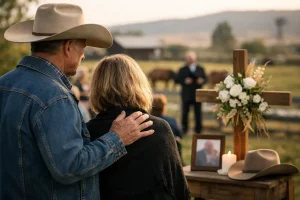
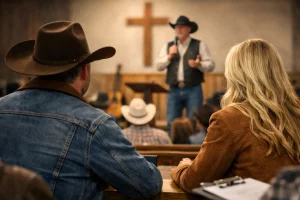
That is why a country funeral service pastor is not just there to read a few verses and offer a prayer. He helps shape a service that feels familiar to the people in attendance. Maybe that means boots in the front row, hats in hand, dusty pickups in the parking lot, and songs that sound right for the life being remembered. Maybe it means holding the service at a church, graveside, family land, a barn, or another place that carries meaning.
The goal is not to put on a performance. The goal is to care for grieving people and point them to Christ in a way that feels honest. Folks in rural communities can tell the difference between polished words and real compassion. They are not looking for fancy. They are looking for true.
What a country funeral service pastor actually does
A good pastor starts by listening. Before he ever stands up to speak, he needs to know who the loved one was. Not the cleaned-up version. The real version. Was he quiet and steady, or larger than life? Did she love the Lord openly, or was her faith shown more in how she cared for people? Did he rope calves, raise cattle, weld pipe, teach grandkids to fish, or show up whenever a neighbor needed help?
Those details matter because they help the message land where it should. Families do not need a generic sermon pasted over personal grief. They need words that recognize the life in front of them while still giving biblical hope.
A country funeral service pastor usually helps with the flow of the service too. That can include opening prayer, Scripture reading, obituary remarks, family memories, a short message, graveside words, and prayer over the family. In some settings, he may also help coordinate with funeral directors, musicians, or family members who want to speak. In more informal country settings, he may help bring order to a service that is deeply personal but not highly structured.
There is a balance here. Some families want a very simple service. Others want more testimony, more music, or more room for stories. Neither is wrong. It depends on the family, the setting, and what best honors the person who has gone on.
The difference between formal and personal
Not every pastor is built for a rural funeral. That is just the truth. Some men are faithful and sincere, but they speak in ways that feel distant from country people. Others understand how to stand in front of a grieving ranch family and talk like a real person.
That difference can change the whole feel of a funeral. A country funeral service pastor knows that country folks often value directness. They appreciate kindness, but they do not need fluffy words. They want someone who can say, with compassion, that death is painful, grief is real, and Jesus Christ is still our hope.
That does not mean every service should sound the same. If the family is deeply rooted in church, the message may lean more openly into the promises of Scripture. If the crowd includes many people who do not normally step inside a church, the pastor may need to speak with even more clarity and simplicity. The truth stays the same. The delivery needs wisdom.
What families should look for when choosing a pastor
The first thing to look for is genuine pastoral care. Families are vulnerable in the days after a loss. They need someone who will return calls, listen carefully, and carry the moment with respect. If a pastor feels hurried from the first conversation, that can be a warning sign.
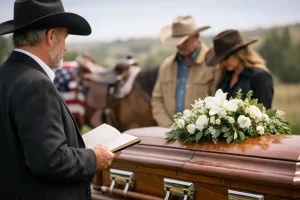
Second, look for someone who understands your people. If your loved one lived a country life, it helps to have a pastor who does not have to study the culture from a distance. He already knows the weight of hard work, family heritage, rodeo grit, and small-town loyalty. He understands why a pair of boots by the casket says something meaningful. He knows why a horse trailer in the lot is not unusual. He does not need translation.
Third, listen for biblical confidence. In a funeral, families need comfort, but they also need substance. A pastor should be compassionate without being vague. He should be able to speak about grief, death, eternal life, and the hope of the gospel without drifting into empty sayings that sound nice but say very little.
And finally, look for flexibility. Country funerals are not always held in polished settings. Weather changes plans. Travel takes time. Families may want graveside service only, or a memorial in an arena, a church, a fellowship hall, or on family property. A pastor serving rural communities well needs to be ready for that kind of real-life ministry.
Country funeral service pastor and the value of place
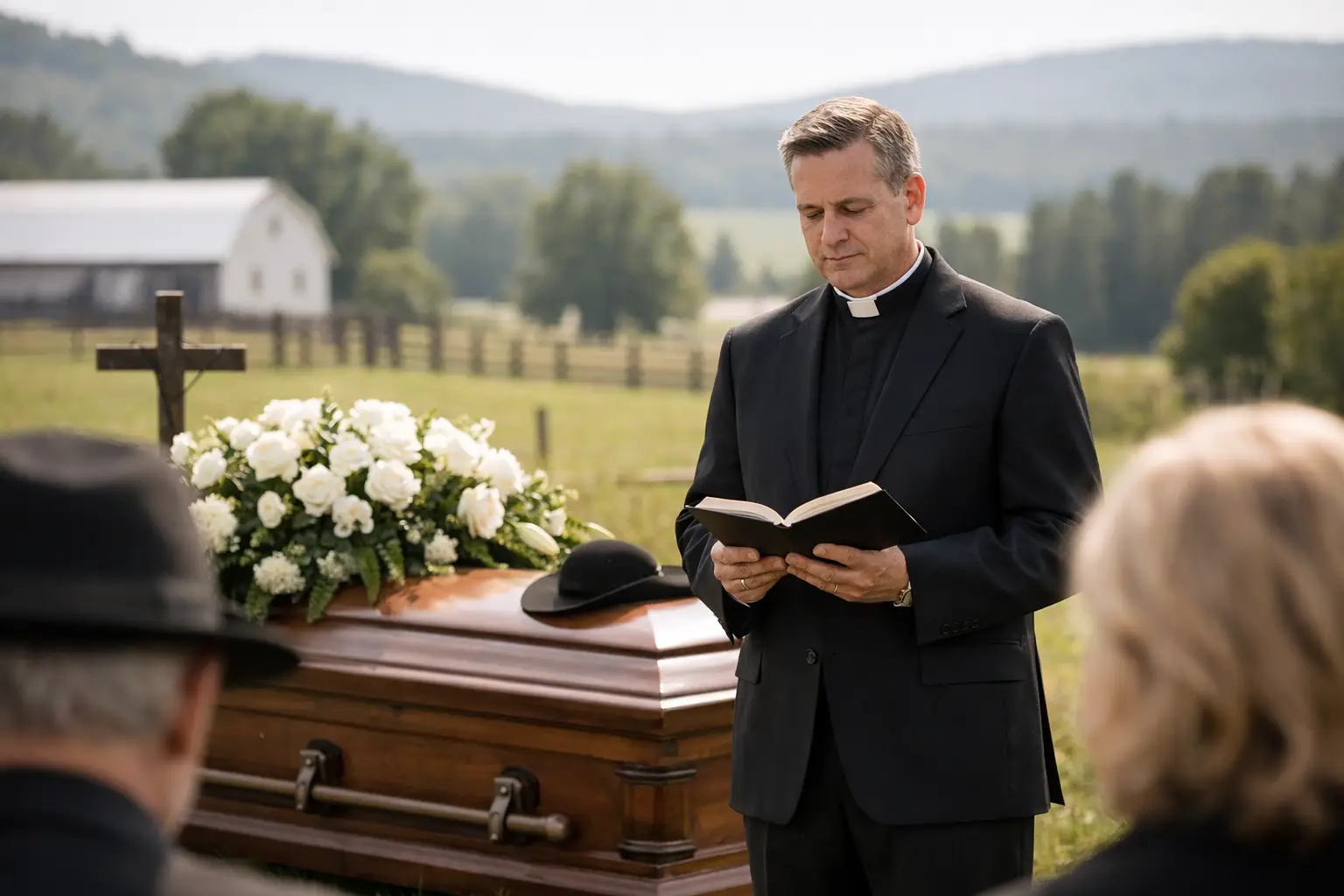
In rural life, place carries memory. A funeral held in a small church where a man worshiped for years feels different than one held in a city chapel that never knew his name. A graveside service on family land, or near the pasture he worked, can carry a kind of meaning that no standard room can replace.
That is one reason the right pastor matters so much. He understands that ministry is not confined to a building. He can bring prayer, preaching, comfort, and biblical truth to the places where country people actually live and gather. For many families, that creates a service that feels less like a production and more like a real goodbye.
There are trade-offs, of course. Outdoor or nontraditional settings may require more planning. Sound can be harder. Seating may be limited. Weather can interrupt things. But many families gladly accept those challenges because the setting reflects the life being honored. Sometimes the most meaningful service is not the most polished one.
Speaking hope without ignoring grief
One of the hardest parts of funeral ministry is holding two truths at once. Death hurts, and hope is real. A pastor who leans too far toward sentiment can leave families with little solid ground. A pastor who speaks only in hard doctrine without tenderness can miss the ache in the room.
A faithful country funeral service pastor does both. He gives room for mourning. He does not rush people past their sorrow. At the same time, he reminds them that for those who trust in Christ, the grave is not the end of the story.
That kind of message is especially important in country communities, where people are often strong, hardworking, and not always quick to talk about pain. A funeral may be one of the few moments when deep grief rises to the surface. The pastor should be able to meet that moment with both strength and gentleness.
A service that feels true to the life lived
The best funeral services do not try to turn a country man into a polished city gentleman or a country woman into someone she never was. They tell the truth with honor. They speak about character, faith, family, failures, laughter, sacrifice, and legacy in a way that sounds like home.
That is where a ministry shaped by the cowboy church world can be a real blessing. At Burleson Cowboy Ministries, the heart behind funeral service is simple – meet families where they are, speak God’s Word clearly, and honor the life of the one they loved in a way that fits their world.
When families are hurting, they do not need a show. They need someone who can stand in the dust, by the casket, at the church front, or beside the grave and remind them that the Lord is near to the brokenhearted. A good funeral service cannot take away the pain, but it can help a family carry it with faith, dignity, and the comfort of knowing they were cared for well.
If you ever find yourself choosing a pastor for that kind of day, trust the one who speaks plainly, listens closely, and knows how to bring real faith with a country heart.