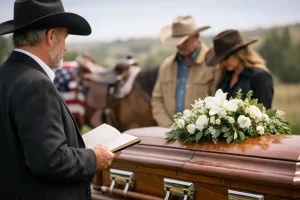
When a ranch family loses someone, the grief does not arrive in a quiet, orderly way. It shows up in the barn at daylight, in the empty seat at the sale barn, in the horse that still looks for its rider, and in the chores that still have to be done. Funeral services for ranch families need to meet people right there – in real life, on familiar ground, with faith that speaks plain and true.
For ranch people, a funeral is not just a formal event on a calendar. It is a sacred time to honor a life built on grit, loyalty, family, and trust in God. It ought to reflect the way that person actually lived. If they spent their years horseback, working cattle, helping neighbors, and loving Jesus in a straightforward way, the service should carry that same spirit. Families do not need something polished for appearance’s sake. They need something honest, respectful, and rooted.
What funeral services for ranch families should feel like
A good service should never feel like it was borrowed from someone else’s life. Ranch families often feel out of place in settings that are too formal, too scripted, or too disconnected from rural culture. That does not mean they want something careless. It means they want something personal.
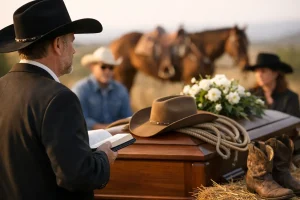
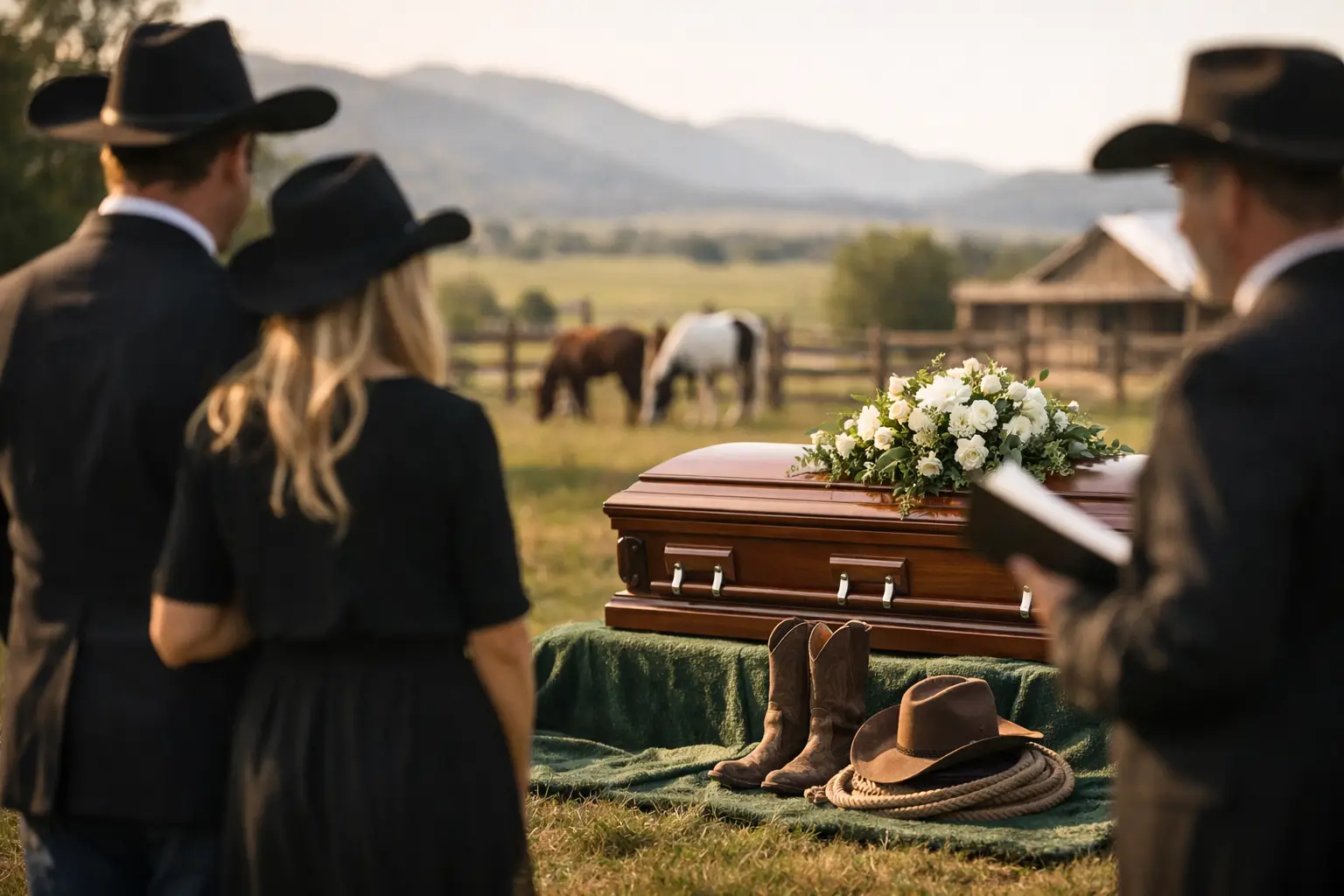
The right funeral service usually has a different kind of rhythm. There may be boots instead of dress shoes, hats in folks’ hands, a gathering under an open sky, or a service held near a barn, arena, pasture, or family land. There may be a horse trailer in the parking area and pickup trucks lined up down a dirt road. None of that makes the moment less sacred. If anything, it can make it more sincere.
The heart of the service is still the same. People need prayer, Scripture, comfort, and hope. They need to hear that grief is real, death is an enemy, and Jesus Christ is still the anchor that holds when life hurts. In ranch country, people usually do not need fancy language. They need truth spoken with compassion.
Faith matters when the family is hurting
In many ranch homes, faith is not a decoration. It is part of how people live, work, endure drought, recover from loss, and keep going after hard seasons. So when death comes, a Christian funeral is not just tradition. It is a way of placing sorrow before the Lord and remembering that this life is not the end of the story.
That matters because grief can leave even strong people unsteady. Ranch families are known for toughness, but toughness and sorrow often ride together. A widow may still be making practical decisions while carrying deep heartbreak. Grown children may be handling cattle, land questions, and funeral details at the same time. Grandkids may be trying to understand a loss that changed the whole feel of the place.
A faith-centered funeral gives that family room to mourn without pretending they have to be made of stone. It reminds them that tears are not weakness. It points them to the God who stays near the brokenhearted. It also honors the life of the person who passed in a way that is more meaningful than a polished speech with no spiritual weight behind it.
The setting matters more than some people realize
There are times when a church building is the right place. There are also times when it is not. For many rural families, the most fitting service may happen somewhere closer to the life their loved one lived.
That could mean a graveside service with a few rows of folding chairs and a cold wind moving across the pasture. It could mean a memorial at a rodeo arena, a ranch headquarters, or a covered barn where friends and family can gather without feeling like strangers in an unfamiliar setting. Sometimes the best choice depends on weather, distance, the size of the gathering, and what the family can reasonably manage during a hard week.
There are trade-offs. An outdoor service can feel deeply personal and natural, but it also requires planning for sound, seating, and weather. A church or funeral home may be easier logistically, but it may not reflect the loved one’s way of life as clearly. That is why families need a minister who listens first, understands rural life, and helps them make a decision that fits both the heart and the practical realities.
Honoring a ranch life without turning it into a performance
Personal touches matter, but there is a difference between meaningful tribute and unnecessary show. The strongest funeral services for ranch families usually keep things simple and true.
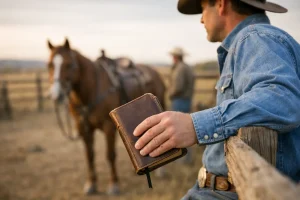
A Bible carried by worn hands, a saddle set near the front, a favorite horse nearby, a hat placed with respect, or stories about branding days, rodeo miles, and quiet acts of kindness can say more than elaborate staging ever could. What matters most is that the details reflect the person honestly.
Some families want several people to speak. Others need one steady voice to guide the service because emotions are too raw. Some want old hymns or country gospel music. Others prefer a shorter graveside gathering with prayer and Scripture. There is no single right formula. The best approach depends on the family, the crowd, the location, and the spiritual condition of those attending.
That is one reason a personal, relationship-based ministry approach makes such a difference. A family in grief does not need to be pushed through a standard program. They need a pastor or minister who can sit with them, hear their stories, and shape the service around the life that was lived.
What families often need most in the planning process
In the first days after a loss, even simple choices can feel heavy. Ranch families may be balancing funeral planning with livestock care, travel arrangements, meals, and relatives coming in from several states. They need guidance that is calm, clear, and practical.
Usually, the first need is simple communication. Who is leading the service? Where will it be held? What kind of tone does the family want? Will there be a visitation, graveside service, memorial, or all three? Once those pieces are in place, the service itself starts to come together.
The next need is trust. The family needs to know that the person speaking at the funeral understands their world. Rural people can tell the difference between someone performing country culture and someone who actually respects it. When the minister understands the values of ranch life – family loyalty, hard work, humility, neighborliness, and reverence for God – the service feels more settled from the start.
Then there is the need for biblical hope. A funeral should honor the person who died, but it should also care for the people left behind. That means speaking to grief honestly while lifting up the promises of Christ. Not every service will feel the same. Some are heavy with sorrow. Some are marked by peace and gratitude. Most are a mixture of both.
Why cultural fit matters in funeral services for ranch families
Ranch families should not have to edit who they are in order to receive pastoral care. They should not have to trade boots for pretense or plain speech for church language that feels distant. Ministry is supposed to meet people where they are, and that is especially true at a funeral.
When a minister understands the cowboy and ranching way of life, there is less explaining and more connection. He knows why the land matters. He knows why a horse, a saddle, or a worn pair of gloves may carry real emotional weight. He understands that some of the strongest people in the room may say very little, yet feel everything deeply.
That cultural fit helps the Gospel come across with clarity instead of friction. It allows the service to feel both reverent and familiar. For families across ranch country, that matters more than many outsiders realize. Ministries such as Burleson Cowboy Ministries serve that need by bringing pastoral care into barns, arenas, ranches, and country gathering places where real faith already lives.
A funeral will never take away the ache of losing someone you love. But it can give a family something steady to stand on. When the service reflects the person’s life, honors the family’s heritage, and points clearly to the Lord, it becomes more than an obligation. It becomes a sacred help in a hard hour, and that kind of care stays with people long after the last truck pulls out of the driveway.