When a family looks around the room after a loss, somebody usually has to step forward. Not because they wanted to, but because love does that. If you are wondering how to lead family funeral arrangements or speak during the service, you are likely carrying grief and responsibility at the same time. That is a heavy load, and it deserves both compassion and clear direction.
In country communities, families often handle hard seasons shoulder to shoulder. Meals get brought over. Horses still need feeding. Kids still need comforting. And when a loved one passes, the family may choose a service that feels personal, simple, and rooted in faith rather than formal or polished. Leading that kind of funeral is not about putting on a performance. It is about honoring a life, speaking truth, and helping people take one step through sorrow together.
What it really means to lead a family funeral
To lead a family funeral means helping guide the gathering from grief toward remembrance, prayer, and hope. Sometimes that means organizing the order of service. Sometimes it means welcoming folks, reading Scripture, sharing a few words, or making sure the family is cared for before and after the service. In some cases, it also means working alongside a pastor or officiant. In others, the family may choose to keep it more personal and have a relative lead much of it.
There is no single right way to do this. A funeral in a church building may feel right for one family. Another may choose a barn, a graveside under open sky, a community hall, or a ranch gathering place. What matters most is that the service fits the person being honored and gives the family room to grieve honestly.
That is the first thing to remember if you are learning how to lead family funeral services well – simple and sincere is better than impressive.
Start with the person, not the program
Before you build an order of service, think about the one you are honoring. What kind of man or woman were they? Were they steady and quiet, the kind who showed love through work? Were they the one who never missed a rodeo, always had a handshake ready, or kept a Bible close by the chair? Did they love old hymns, horses, family dinners, branding days, or sunrise over a pasture?
A good funeral feels true to the person. That does not mean every detail has to be custom made. It means the tone should match their life. If they were plainspoken, let the service be plainspoken. If they loved the Lord, do not be shy about speaking of faith. If they valued family and community, make room for those voices.
This also helps with hard decisions. Families can get overwhelmed trying to do too much because they do not want to leave anything out. But not every song, story, or photo has to make the program. Choose what best reflects the life that was lived.
How to lead family funeral planning without adding more strain
The planning side can be the hardest part because grief clouds everything. People are tired, emotional, and sometimes not on the same page. One person wants a short graveside service. Another wants a full church service with special music. Another is focused on food, flowers, and who is coming in from out of town.
If you are helping lead, your job is not to control every opinion. Your job is to keep the family centered on what matters most. Start with a few steady questions. What kind of service would best honor this person? What would bring comfort to the immediate family? What practical pieces must be decided right away?
It helps to keep decisions in simple groups: place, time, speakers, music, Scripture, burial details, and who handles communication. Once those are settled, the rest can follow. When emotions are running high, calm structure is a gift.
You may also need to accept that not every choice will please everybody. That is part of family life, especially in grief. Lead gently, but do not get stuck trying to make the service perfect. Faithful is better than perfect.
Building a service that feels grounded and honest
Most family funerals do not need a complicated format. They need a beginning, a middle, and an end that gives people something solid to hold onto. A welcome, an opening prayer, a reading from Scripture, a song, personal memories, a short message, and a closing prayer is often enough.
If the loved one had a strong Christian faith, let that be clear in the service. There is comfort in hearing God’s Word when hearts are raw. Psalm 23, John 14, Romans 8, and 2 Corinthians 5 are often read because they speak to both sorrow and hope. You do not have to explain every verse deeply. Sometimes reading Scripture plainly is enough.
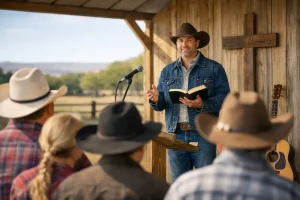
When it comes to speaking, shorter is usually better. A few true words carry more weight than a long speech that wanders. Tell people who this person was. Name the loss honestly. Point to the faithfulness of God. If there is a message of salvation that fits the setting and the family’s beliefs, share it with humility and conviction.
What to say when you stand up to speak
This is where many people freeze. They do not mind helping with arrangements, but they are afraid of saying the wrong thing in front of everyone.
The truth is, people are not expecting polished words. They are listening for love, honesty, and steadiness. You can begin simply by welcoming everyone, thanking them for coming, and saying why you have gathered. From there, speak about the person in a way that is real. Not sugar-coated. Not harsh. Just true.
If they were a hard worker, say that. If they were stubborn and generous in the same breath, say that too. Funerals do not need fake sainthood. They need truthful honor. Some of the most comforting moments come when people hear a story and think, yes, that was exactly them.
Then, if you are speaking from a Christian foundation, remind folks that grief is real but not hopeless. Jesus met people in sorrow. God is near to the brokenhearted. Death hurts, but it does not get the last word for those who trust in Him.
If you get emotional while speaking, that is not failure. It means you loved them.
Caring for the family while the service is happening
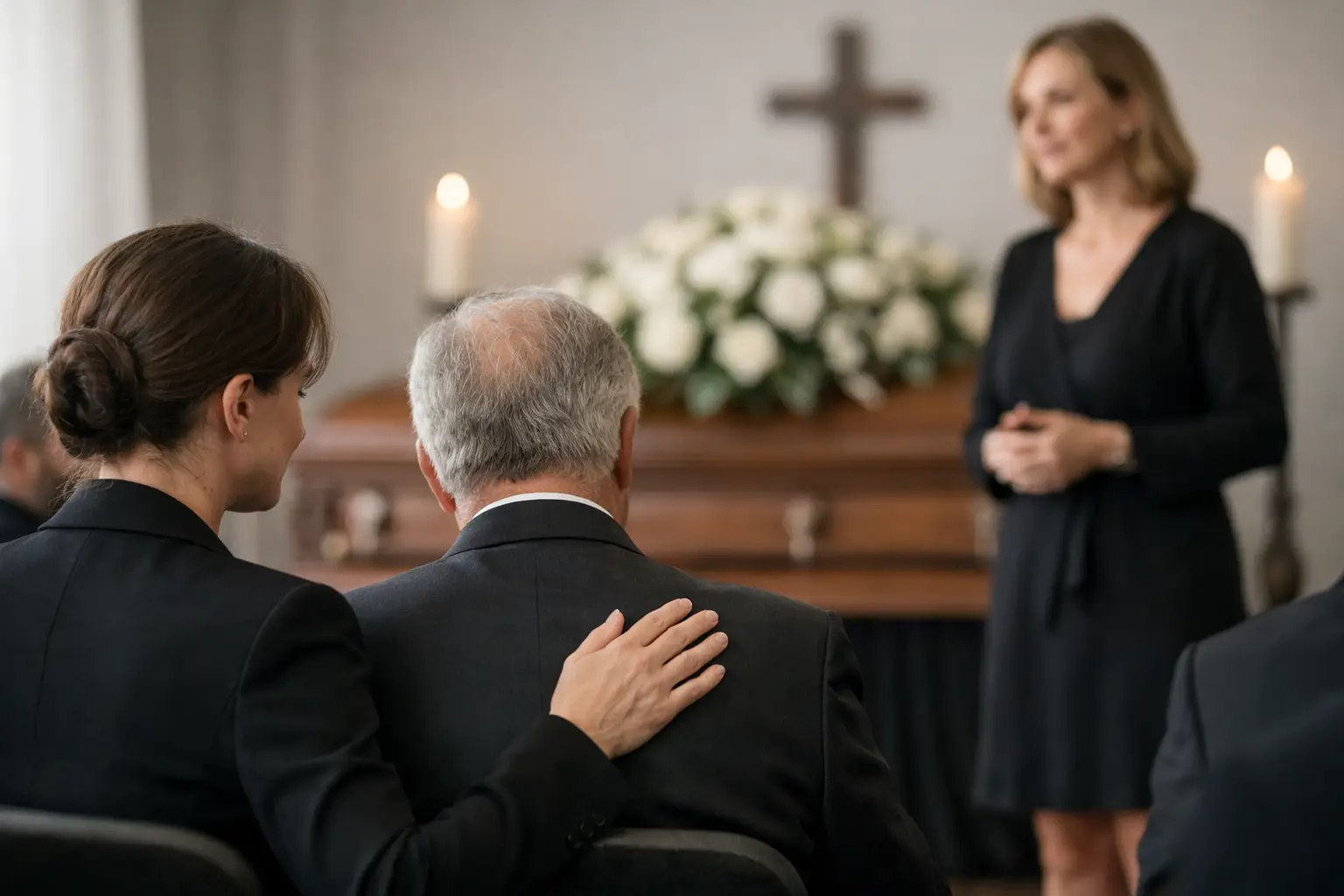
Leading a funeral is not only about microphones and timing. It is also about watching over people. Make sure immediate family members know what to expect before the service starts. Tell them who is speaking and when. Let them know it is fine if they need to step out, cry, or stay quiet.
If children are present, a little preparation helps. Let them know what the setting will be like in plain terms. Give them a trusted adult nearby. In ranching and rodeo families, kids are often included in life’s hard moments, and that can be healthy when handled with care.
It also helps to assign a few dependable people to practical needs. One person can greet arrivals. Another can help with seating. Another can handle photos, music, or coordination at the graveside. If one person tries to carry all of it, they will be worn thin before the day even begins.
When family dynamics are complicated
Not every funeral is wrapped in peace. Some families carry old hurts, sharp disagreements, or strained relationships. Loss can soften people, but it can also stir up conflict.
If that is part of your situation, keep the focus on the purpose of the day. The funeral is not the place to settle old scores. It is the place to honor a life and care for the grieving. Set respectful boundaries where needed. Keep the service centered, and ask a trusted pastor, family friend, or ministry leader to help if tensions are likely.
This is one reason families often appreciate a grounded outside voice. A pastor who understands rural life and faith can bring steadiness when emotions are running wide. Burleson Cowboy Ministries serves families in that exact kind of space, where grief, faith, and Western roots all meet in real life.
Let the service sound like home
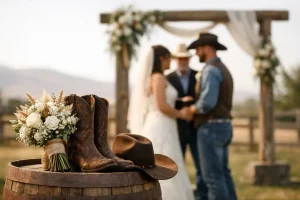
For cowboy, ranching, and rodeo families, a funeral should not feel like it belongs to strangers. It can carry the sounds, words, and values that fit the life being remembered. That may be a favorite hymn sung plain and strong. It may be boots in the aisle, hats in hand, and prayers spoken without fancy language. It may be stories about cattle, long drives, arena dust, or the kind of quiet sacrifice that never made headlines but built a family.
That kind of service reaches people because it is honest. It meets them where they are. Real faith with a country heart does not need dressing up.
If you are figuring out how to lead family funeral moments in a way that truly helps, remember this – your presence matters more than polish, truth matters more than perfection, and the Lord is able to carry what feels too heavy for you. Just take the next right step, speak with love, and let the day honor both the life that was lived and the hope that still remains.