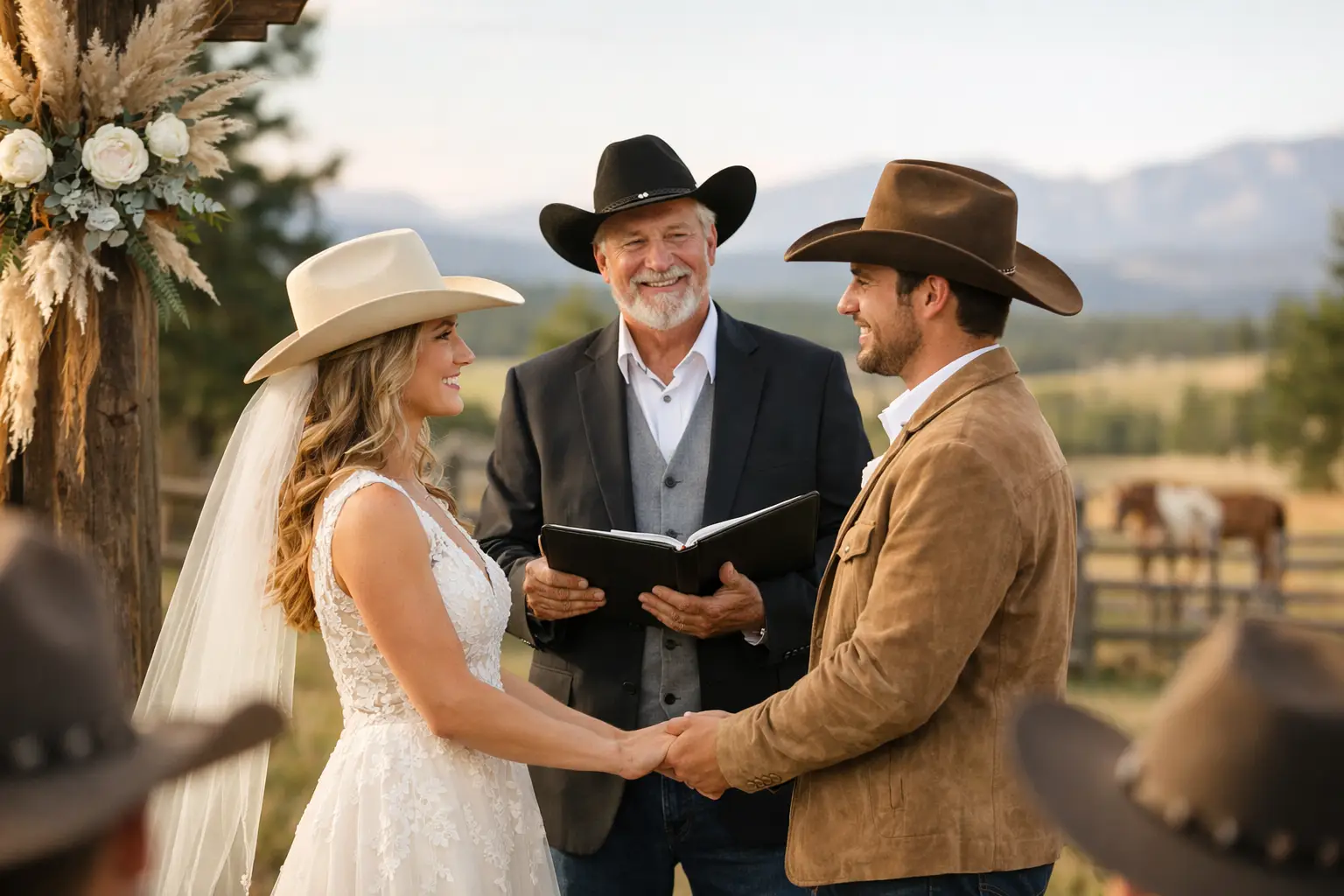
A wedding out by the barn, under an oak tree, or beside a set of arena rails should not feel like a ceremony borrowed from somewhere else. Western wedding officiant services matter because the person leading your vows helps set the whole tone. If your life is rooted in faith, family, hard work, and country tradition, your wedding ceremony ought to sound and feel that way too.
For many couples, the venue gets plenty of attention, but the officiant is what holds the moment together. The right one does more than show up with a script. He helps bring peace to the day, keeps the focus on the covenant being made, and speaks in a way that feels natural to the people standing in their boots and Sunday best. That is especially true for ranch families, rodeo folks, and couples who want a Christian ceremony without making it stiff or overly formal.
What western wedding officiant services really include
At the most basic level, western wedding officiant services provide someone legally able to perform the marriage ceremony. But for couples planning a Western-style wedding, that basic definition is not enough. You are not just looking for a signature on a license. You are looking for someone who can stand in front of your family, honor the seriousness of marriage, and lead the day with confidence and warmth.
That usually means helping shape the ceremony, talking through the order of events, discussing whether Scripture will be included, and making sure the language reflects your values. Some couples want a clearly Christian ceremony with prayer and biblical teaching. Others want faith present in a quieter way. The right officiant can guide that conversation without pressure while still being honest about what he believes and how he serves.
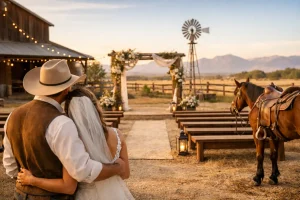
It also means being comfortable outside a traditional church setting. A lot of Western weddings happen at barns, ranches, private land, event venues, rodeo grounds, and open-air locations. Those places are beautiful, but they come with their own realities. Wind picks up. Sound carries differently. Horses move around. Guests spread out. An experienced officiant knows how to work with the setting rather than fight it.
Why a Western-style ceremony needs the right officiant
A Western wedding has its own rhythm. It is often more personal, less polished, and more rooted in family history than a ballroom event in the city. That is part of the beauty. But it also means the ceremony can feel off very quickly if the officiant does not understand the culture.
Folks in the cowboy and ranching community can usually tell within the first minute whether somebody is real or just playing dress-up in a Western setting. If the message sounds canned, too theatrical, or disconnected from faith and country life, people feel it. The ceremony may still happen, but it will not carry the same weight.
A good fit speaks plainly. He respects the crowd. He knows how to be heartfelt without putting on a show. He understands that this is a holy moment, but also a family gathering where granddad may be in a pressed pearl-snap and the kids may be a little dusty from being outside. That kind of setting does not need polish for the sake of polish. It needs sincerity.
Faith-centered western wedding officiant services
For many couples, faith is not an extra detail added to the wedding day. It is the reason for the promises being made. Marriage is more than romance and more than a celebration. It is a covenant before God, witnessed by the people who love you most.
That is why faith-centered western wedding officiant services can make such a difference. A Christian officiant can bring biblical truth into the ceremony in a way that is steady, encouraging, and grounded. He can speak about commitment, sacrifice, love, forgiveness, and the strength that comes from building a home on the Lord rather than on feelings alone.
That does not mean every ceremony has to sound the same. Some couples want a short message and a simple exchange of vows. Some want prayer over the marriage, mention of family legacy, or a stronger emphasis on Christ-centered living. It depends on your church background, your comfort level, and what you want your guests to hear on that day. The key is finding an officiant who can keep the ceremony biblical and personal at the same time.
What to look for before you book
A lot of couples start by asking whether the officiant is available on their date. That matters, of course, but it should not be the only question. You are inviting somebody into one of the most important moments of your life, so the fit needs to go deeper.
Start with whether he understands Western culture beyond appearances. Has he spent time with ranch families, rodeo communities, or cowboy church circles? Does he sound at ease in that setting? You are not looking for an actor. You are looking for somebody whose life and ministry already line up with the people he serves.
Next, ask how he handles ceremony planning. Some officiants work from a fixed script. Others build the ceremony with you. Neither approach is automatically wrong, but most couples appreciate some room for personal touches. Maybe you want to include a favorite Bible verse, honor parents and grandparents, or keep the ceremony brief before moving into the celebration. Those details matter.
It is also wise to ask how faith is presented. If you want an openly Christian ceremony, make sure the officiant is comfortable leading that way. If you want something respectful and clear without being too long, say that upfront. Good communication ahead of time keeps everybody on the same page.
Then there is the practical side. Ask about travel, rehearsal expectations, arrival time, and marriage license signing. Western weddings often happen in places outside the usual route, so it helps to work with someone who is used to traveling and serving people where they are. That kind of ministry mindset matters.
Ranch, barn, and outdoor weddings come with real considerations
One reason western wedding officiant services are so valuable is that outdoor and rural weddings are not one-size-fits-all. A chapel wedding usually follows a familiar setup. A ceremony in a pasture or by a barn can be wonderful, but it needs flexibility.
The officiant may need to project without sounding forced, adjust to weather, shorten certain moments if conditions change, or keep things moving when guests are dealing with heat, cold, dust, or uneven ground. That does not take away from the sacredness of the day. If anything, it highlights the need for somebody calm and prepared.
There is also the matter of atmosphere. Western weddings often carry a relaxed feel, but relaxed should not mean careless. A good officiant knows how to honor the gravity of marriage while still fitting the setting. He can keep the ceremony reverent without making it feel formal in a way that does not belong.
A ceremony that sounds like you
The strongest wedding ceremonies usually feel simple, but not generic. They sound like the couple. They reflect the life being built, the values being honored, and the kind of home the bride and groom want to create.
That is where personal, faith-driven service makes all the difference. Maybe your story includes years of ranch work, rodeo travel, blended family life, or a shared commitment to Christ that carried you through hard seasons. Those things do not need to become a long speech, but they can shape the words spoken over your marriage.
For couples who want real faith with a country heart, that personal touch matters. An officiant should be able to stand in that space, speak truth with compassion, and make the ceremony feel anchored instead of performed. That is a different thing than simply reading lines from a page.
At Burleson Cowboy Ministries, that kind of service makes sense because ministry is built around meeting people in the places they actually live and gather, not asking them to step into a mold that does not fit.
The best choice is the one that brings peace
When couples find the right officiant, they usually feel it pretty quickly. There is a sense of ease. The conversation is straightforward. The values line up. Nothing feels forced. That peace matters because weddings move fast, and there are already enough decisions to make.
The right officiant should leave you feeling confident that your ceremony will be handled with care, biblical conviction, and genuine respect for your way of life. He should understand that this is not only a celebration but the beginning of a marriage that will need faith, grit, grace, and commitment long after the guests go home.
If you are planning a wedding with boots on the ground and Christ at the center, do not treat the ceremony as an afterthought. Choose someone who can speak to your people, honor your promises, and help start your marriage with the kind of truth that still holds when the day is done.