A ranch wedding can take place beneath a big Texas sky, beside an old barn, in a working arena, or under the shade of live oaks. But before the chairs are set out and the horses are brushed down, couples need a clear answer to one important question: who can officiate a ranch wedding?
The right person does more than stand in front of the guests and read a few lines. They help make the marriage legal, honor the couple’s faith, and bring a steady presence to one of the biggest moments of their lives. For couples with cowboy, ranching, or rodeo roots, it also matters that the officiant understands the setting and speaks in a way that feels genuine.
Who Can Officiate a Ranch Wedding?
A ranch is a beautiful place to get married, but it does not change the legal requirements for marriage. The ceremony must be performed by someone authorized under the laws of the state where the wedding takes place. In Texas, that often includes an ordained or licensed Christian minister, priest, rabbi, or other recognized religious official. Certain judges and justices may also have authority to perform a marriage ceremony.
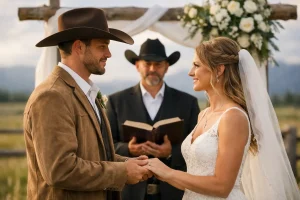
For many couples, an ordained minister is the natural choice. A minister can lead a Christian ceremony that is personal, biblical, and fitting for an outdoor Western setting. He can pray with the couple, speak about the covenant of marriage, include Scripture, and keep the ceremony from feeling like it was copied from a wedding catalog.
A judge or justice may be a good fit for couples who want a civil ceremony with little or no religious content. A friend can sometimes officiate as well, but only if that person is properly ordained or otherwise legally authorized in the state where the marriage license is issued. Do not assume an online ordination, a title, or a strong public-speaking voice is enough. State and county rules can vary, and the responsibility for making sure the marriage is valid is too important to leave to guesswork.
Start With the Marriage License, Not the Microphone
The marriage license is what makes the legal side of the wedding possible. Before choosing an officiant, confirm the requirements with the county clerk where you will obtain the license. Ask how long the license is valid, whether there is a waiting period, what identification is required, and who must return the completed license after the ceremony.
In Texas, the couple obtains a marriage license through a county clerk, and the completed license must be returned as required after the wedding. The officiant will generally complete the portion assigned to them, but couples should talk through that responsibility before the ceremony day. A lost license or an unsigned form can turn a joyful day into an unnecessary headache.
If your ranch sits near a county line, or if you are marrying at a family place in another state, verify the rules for the state where the ceremony will happen. A wedding at an Oklahoma ranch follows Oklahoma law, even if the couple lives in Texas. The location of the ceremony matters.
Questions to Ask an Officiant Before You Book
A good officiant will welcome practical questions. Ask whether they are authorized to perform weddings in your state, whether they have officiated outdoor or ranch weddings before, and what they need from you to complete the license correctly.
You should also ask what kind of ceremony they offer. Some couples want a short ceremony with a prayer and a few meaningful words. Others want Scripture, personal vows, a unity ceremony, family participation, or a full message about marriage. Neither choice is more faithful just because it is longer. What matters is that the ceremony reflects your commitment to God and to one another.
It also helps to talk about weather plans, sound equipment, the rehearsal, and timing. Wind does not care that everyone has a printed ceremony program. A seasoned ranch wedding officiant knows to speak clearly, stay flexible, and keep the focus on the couple when a horse whinnies, a calf calls, or the weather shifts.
Choosing a Faith-Centered Officiant
For Christian couples, marriage is more than a legal agreement and more than a good party. It is a covenant made before God. That does not require a fancy chapel or polished church language. It does call for an officiant who takes the commitment seriously and can share the Gospel with both truth and compassion.
The best fit is often a minister who respects rural life instead of treating it like a costume. Ranch families know early mornings, hard work, livestock, weather, and the kind of neighborly loyalty that shows up when somebody needs help. A wedding message can honor that way of life without turning the ceremony into a rodeo routine.
A faithful officiant can speak plainly about love, sacrifice, forgiveness, and staying committed when life gets hard. Those are not abstract ideas. They are the same kind of steady qualities that hold together a good ranch, a close family, and a strong marriage.
Burleson Cowboy Ministries serves couples who want real faith with a country heart. A wedding ceremony can be held at a ranch, barn, arena, outdoor venue, or family property while still being reverent, personal, and grounded in Scripture.
Can a Family Member or Friend Officiate?
Yes, sometimes. A trusted family member or friend can make a ceremony feel deeply personal, especially if they have walked with the couple through their relationship. But personal connection and legal authority are two different things.
If you are considering a friend, first confirm that they are legally authorized to officiate in your state. Then consider whether they are comfortable leading a ceremony in front of a crowd, managing the marriage license, and carrying the spiritual weight of the moment. A nervous friend may still do a beautiful job, but they need clear preparation and a ceremony they can deliver with confidence.
There is also a middle ground. A legally authorized minister can officiate the marriage, while a parent, grandparent, sibling, or close friend reads Scripture, offers a prayer, shares a blessing, or presents the rings. That lets loved ones take part without creating uncertainty about the legal paperwork.
Plan for the Ranch Setting
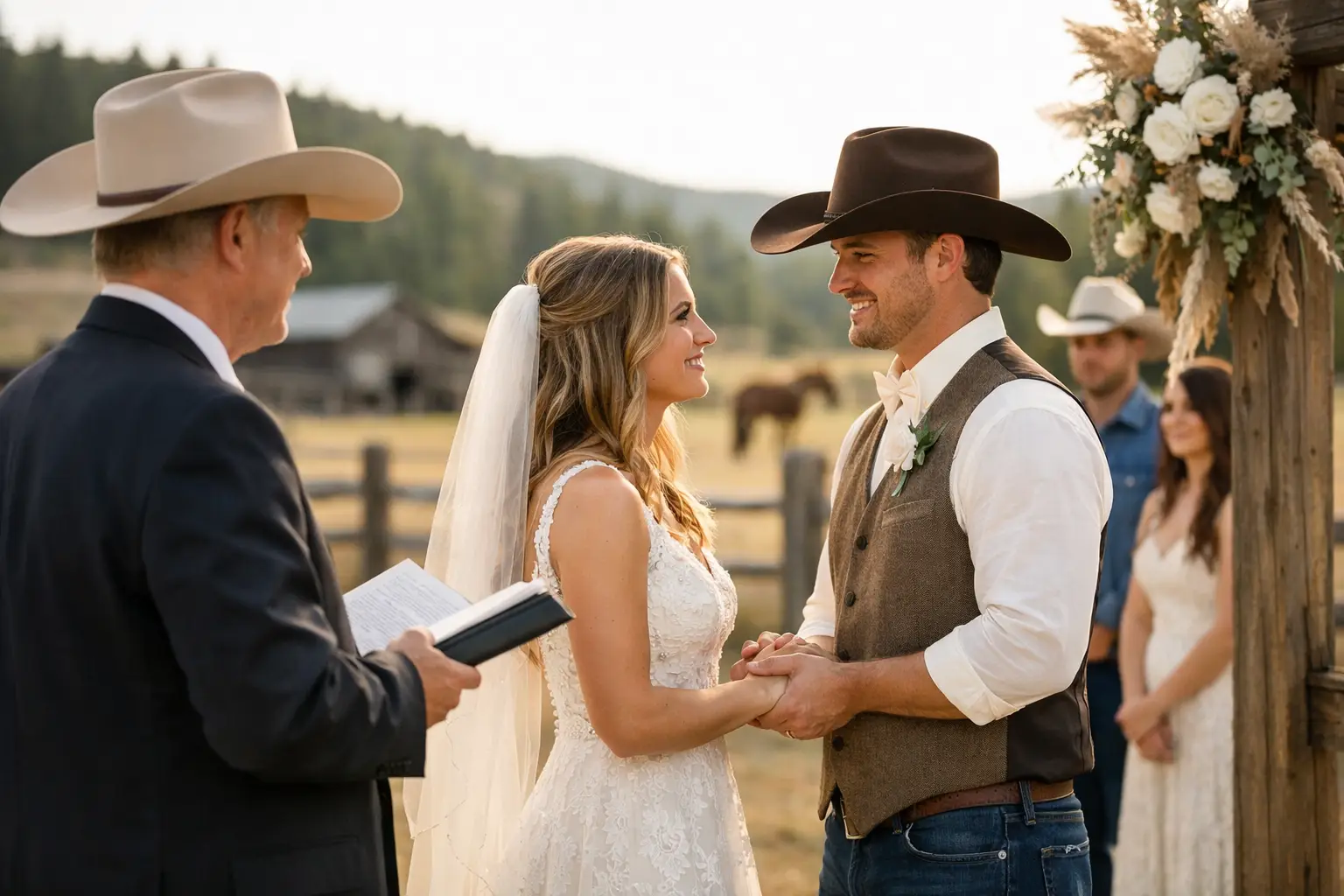
Ranch weddings are memorable because they are real. The land has history. The barn may have been built by family hands. The boots may be dusty, the flowers may be picked close to home, and the people gathered may have known the couple since childhood. That is exactly why a little planning goes a long way.
Choose a ceremony location that is accessible for grandparents and guests who may have trouble walking across uneven ground. Think through shade, parking, restrooms, sound, and a backup location if rain moves in. If the ceremony is near livestock or an active arena, give the animals enough distance that everyone can hear and remain comfortable.
The officiant should arrive early enough to see the space, check where the couple will stand, and make sure the witnesses and license are accounted for. A short rehearsal is wise, even for a laid-back wedding. It gives everyone a chance to know where to walk, when to hand over the rings, and who is holding the paperwork afterward.
Make the Ceremony Sound Like Your Life
Your ceremony does not need to sound like somebody else’s to be meaningful. A ranch wedding can be simple and still carry deep weight. You might include a favorite Bible verse, a prayer for the new home, or vows that speak honestly about building a life together through good seasons and hard ones.
Keep the promises at the center. The scenery is beautiful, the crowd is there to celebrate, and the reception will be full of good stories. But the covenant is what lasts after the last truck leaves the pasture.
Choose an officiant who can help you enter that covenant with clear legal preparation, a steady heart, and faith that is strong enough for the trail ahead.