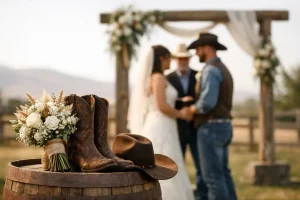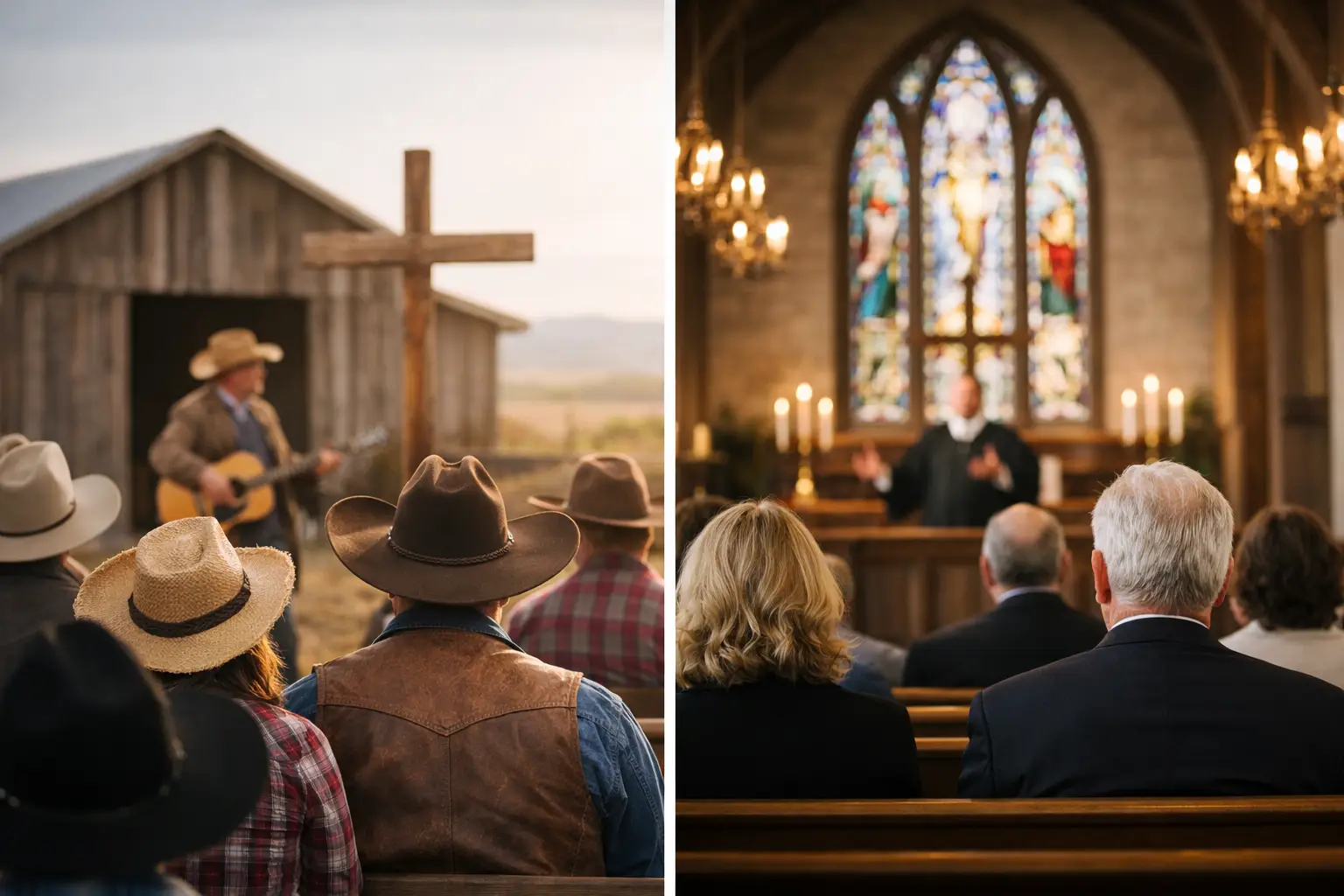
Walk into a cowboy church and you might see boots, hats, denim, a barn, an arena, or a gathering under an open sky. Walk into a traditional church and you may find pews, stained glass, choir robes, and a more formal order of service. That contrast is what many folks mean when they ask about cowboy church versus traditional church. They are not asking which one loves Jesus more. They are asking where they fit, how ministry reaches people, and what kind of church life helps faith take root in the real world.
That question matters a lot in ranching country, rodeo towns, and rural communities where many people believe in God but have never felt fully at home in a conventional church setting. Some have been hurt before. Some work long hours and live a life that does not line up neatly with a church calendar. Some simply want preaching that speaks plain and worship that does not feel like they have to leave their whole way of life at the door.
Cowboy church versus traditional church: the real difference
At the heart of cowboy church versus traditional church, the biggest difference is not the gospel. The gospel stays the same. Jesus Christ does not change because the setting changes. The difference is in culture, delivery, and the way a church makes room for people.
A traditional church often follows established patterns. That may include formal membership, a set order of worship, a dedicated church building, and ministry programs that have been in place for years. For many families, that structure brings comfort. It gives a sense of continuity, reverence, and stability.
A cowboy church usually starts from a different place. It asks, how do we bring biblical truth to people who live in boots instead of dress shoes, who gather at arenas and ranches, and who may never step into a sanctuary unless someone meets them where they are? The setting feels more familiar to the Western and rural crowd. The language is often plainer. The atmosphere is less formal. The goal is not to make church casual just for the sake of it. The goal is to remove barriers that keep people from hearing the Word of God.
Worship style and atmosphere
One of the first things people notice is the tone of the room. In a traditional church, worship may feel more liturgical or structured. There may be choirs, hymns from a hymnal, responsive readings, and a service that follows a familiar order every week. That kind of rhythm can be deeply meaningful. It reminds people that worship is holy, ordered, and bigger than personal preference.
In a cowboy church, worship tends to feel more relaxed and culturally familiar. You may hear country gospel, simple acoustic music, or songs led in a way that feels more like a gathering of neighbors than a formal presentation. People may come in from work, dusty from the day, and not feel out of place. That matters more than some folks realize. When people are at ease, they often listen more honestly.
Still, relaxed does not mean shallow. A cowboy church can be deeply reverent without looking polished. It can preach repentance, grace, salvation, and obedience with just as much conviction as any church with stained glass and a steeple.
Preaching and how people receive it
Preaching style is another place where the difference shows up.
Traditional churches often teach through a denominational framework or a long-established style of sermon delivery. That can be rich, thoughtful, and grounded in history. For believers who want theological depth and a more formal teaching environment, that may be a strong fit.
Cowboy church preaching usually aims for direct, plainspoken biblical truth. It does not try to sound fancy. It speaks to real life – broken families, hard work, grief, addiction, pressure, loss, and the need for redemption. It often uses stories and examples that make sense to ranchers, rodeo families, horse folks, and working people.
That does not mean one approach is better in every case. Some people need the steadiness of formal teaching. Others need someone to open the Bible in language that feels close to home. A good church knows how to preach truth clearly. The setting only changes how that truth is heard.
Community life and belonging
For many people, the biggest issue in cowboy church versus traditional church is not music or dress. It is belonging.
Traditional churches can offer strong community, especially for families who have attended for years. They often have children’s programs, women’s groups, men’s ministries, Sunday school classes, and a regular weekly rhythm. That kind of church life can be a real blessing.
But it can also feel hard to enter from the outside. If a church has a long history and established circles, newcomers may feel like they are visiting someone else’s family reunion.
Cowboy churches often put a strong emphasis on being approachable from day one. The cowboy church community takes care of its own, and it usually works hard to make sure new folks feel seen. That can be especially meaningful for people who have spent years on the edges of church life. They are not being asked to learn a church culture before they can belong. They are being welcomed as they are, while still being called to follow Christ.
That said, there are trade-offs. A newer or smaller cowboy church may not have as many organized programs as a larger traditional church. If someone is looking for a wide range of classes, age-based ministries, or formal discipleship tracks, a traditional church may offer more in that area.
Where ministry happens
This is where cowboy ministry stands out in a strong way. Traditional churches are usually centered around a church building. That building becomes the hub for worship, fellowship, weddings, funerals, and pastoral care. There is nothing wrong with that. A church building can be a faithful and beautiful place where generations meet God.
Cowboy ministry often carries church into the places where people already live and gather – barns, arenas, ranch properties, outdoor spaces, fairgrounds, and community events. That approach tells people something important: you do not have to clean up your background, your accent, your work clothes, or your way of life before the gospel comes near you.
For rural families, that kind of ministry can be a lifeline. It is practical. It is personal. It respects the fact that not everybody lives close to a church building or feels ready to walk through one.
That is one reason ministries like Burleson Cowboy Ministries matter to so many people. They bring real faith with a country heart straight into the settings where Western families work, celebrate, mourn, and need prayer.
Does one have more biblical value than the other?
That question deserves an honest answer. No church should be judged by whether people wear boots or suits. The real issue is whether the church teaches the Bible faithfully, points people to Jesus Christ, and cares for souls with truth and love.
A cowboy church can be biblically solid, or it can become too focused on culture if it is not careful. A traditional church can be biblically solid, or it can become so tied to formality that it forgets how to reach hurting people. Either model can drift if it loses sight of the mission.
The best version of both keeps the main thing the main thing. Scripture is preached. People are called to repentance and faith. Prayer matters. Community matters. God is honored.
Who tends to thrive in each setting?
Some folks thrive in a traditional church because they value structure, long-standing traditions, and a more formal atmosphere. They may want a strong denominational identity, established programs for every stage of life, and a setting that feels ordered and historic.
Others thrive in a cowboy church because they need room to breathe. They want preaching that sounds like everyday language. They want worship that fits their culture. They want to be ministered to in places that feel natural to them. For ranching families, rodeo hands, horse trainers, and folks who carry a deep country identity, that can make all the difference.
And for some people, the answer is not either-or. A person may have grown up in a traditional church and still love the simplicity and openness of cowboy ministry. Another may come to Christ through cowboy church and later feel led toward a more traditional congregation. Faith journeys are personal. Church fit can change by season.
The better question to ask
Instead of asking which one is better, it may help to ask a different question: where am I most likely to grow in obedience to Christ, hear the Bible clearly, and stay connected to godly community?
That question gets past appearance and goes straight to what matters. Church is not a fashion choice or a branding exercise. It is where people are shepherded, challenged, encouraged, and reminded that they belong to the Lord.
If a cowboy church helps a man who never felt comfortable in church finally hear the gospel, that matters. If a traditional church helps a family stay rooted in faithful worship for generations, that matters too. The Kingdom of God is bigger than one building style, one dress code, or one cultural expression.
What people need is not a church that performs for them. They need a church that will tell them the truth, love them well, pray with them when life breaks open, and keep pointing them back to Jesus. If you find that in a barn, praise God. If you find that in a sanctuary, praise God. The right church home is the one that helps you walk with Him with a sincere heart and steady faith.